Lintel Repair in Ames, IA | 10+ Years Experience
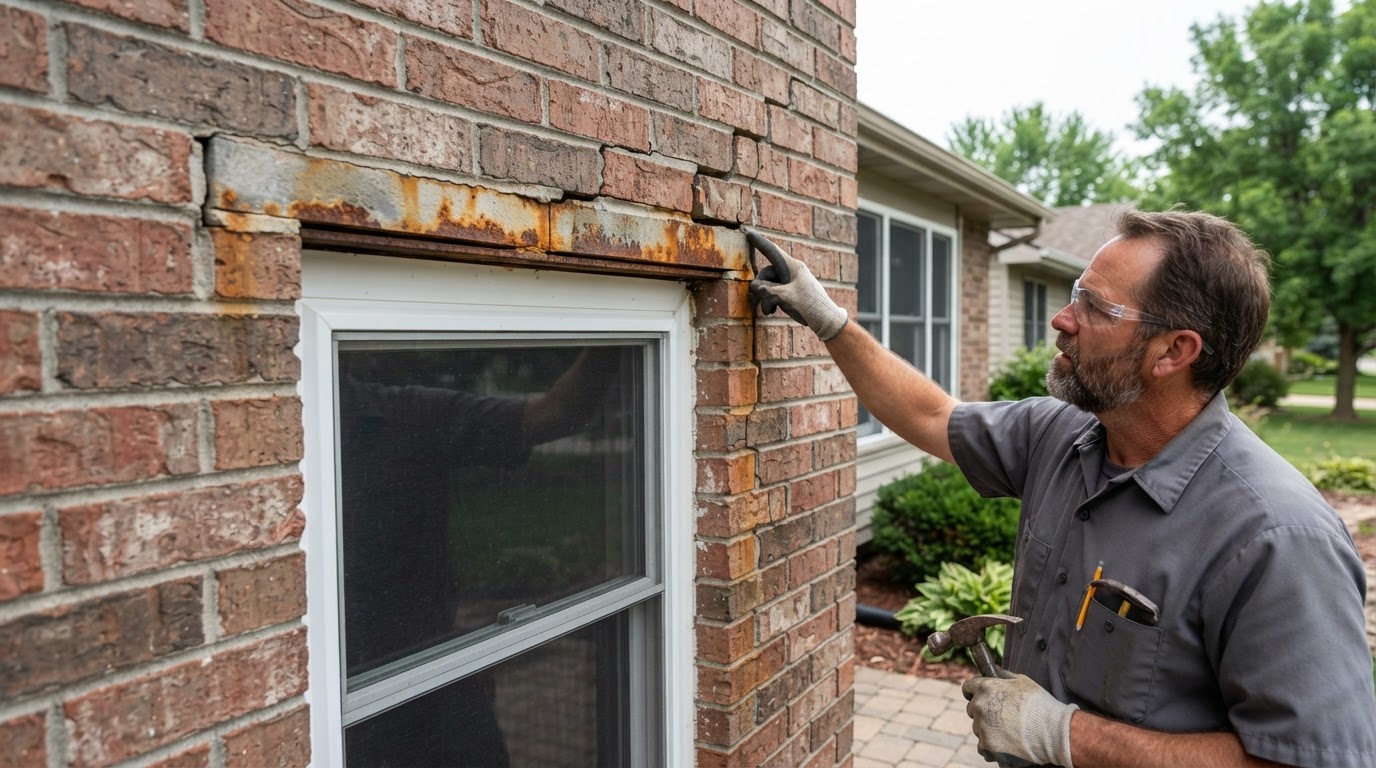
Ames Masonry Pro repairs masonry distress above doors and windows where steel lintel conditions are implicated, for residential and commercial properties across Ames, Nevada, Huxley, and Story City. When you see horizontal or stair-step cracking above an opening, displaced brick, rust staining, or opened joints, the steel lintel carrying the masonry may have corroded, sagged, or lost bearing — and the masonry above it is showing the strain.
With 10+ years of hands-on masonry experience and insured service, every lintel project evaluates the symptoms versus the cause, determines whether support conditions are involved, and defines the repair scope — which may include treating or replacing corroded steel, restoring flashing, and rebuilding brick over the opening. This work has structural and safety implications, so permit or engineering requirements depend on the actual scope and should be verified for the project. No structural calculation, temporary-support, or demolition instructions are provided to property owners.
Request an Estimate
Tell us about your project. We respond to estimate requests for Ames, Nevada, Huxley, Story City, Iowa.
Why Choose Ames Masonry Pro for Lintel Repair in Ames?
10+ Years of Masonry Experience
More than a decade of masonry work informs how each opening is evaluated — reading whether cracking above a window is from lintel corrosion, movement, settlement, or unrelated causes. That experience means the repair addresses the actual support condition rather than just repointing the visible cracks.
Insured Service
Ames Masonry Pro is insured, giving property owners protection while lintel-related masonry repair is underway on their home or commercial building. Insurance is part of doing the job responsibly on work with structural implications.
Symptom-vs-Cause Evaluation
Cracking above an opening is a symptom, and the cause — lintel corrosion, movement, settlement, or deteriorated support — must be diagnosed before repair. Not every crack above a window is a lintel problem, and the evaluation distinguishes lintel-related distress from other movement causes.
Masonry and Opening Expertise
Repairing masonry around openings requires understanding how lintels, flashing, bearing, and brick veneer interact. That expertise ensures the rebuild over an opening restores proper support and water management, not just the appearance of the brick.
Water and Corrosion Awareness
Steel lintel corrosion is usually driven by water entry — failed flashing, sealant, or mortar joints let moisture reach the steel, which rusts and expands, disturbing the masonry. Addressing the water source is part of the repair, or the corrosion will recur.
Permit and Engineering Awareness
Lintel work with structural implications may require permits or engineering input, and that requirement depends on the actual scope. Where engineering or other licensed specialty input is needed for a particular project, that is identified so the work proceeds with the right professional review.
Our Lintel and Masonry Opening Repair Services
Masonry Repair Above Windows and Doors
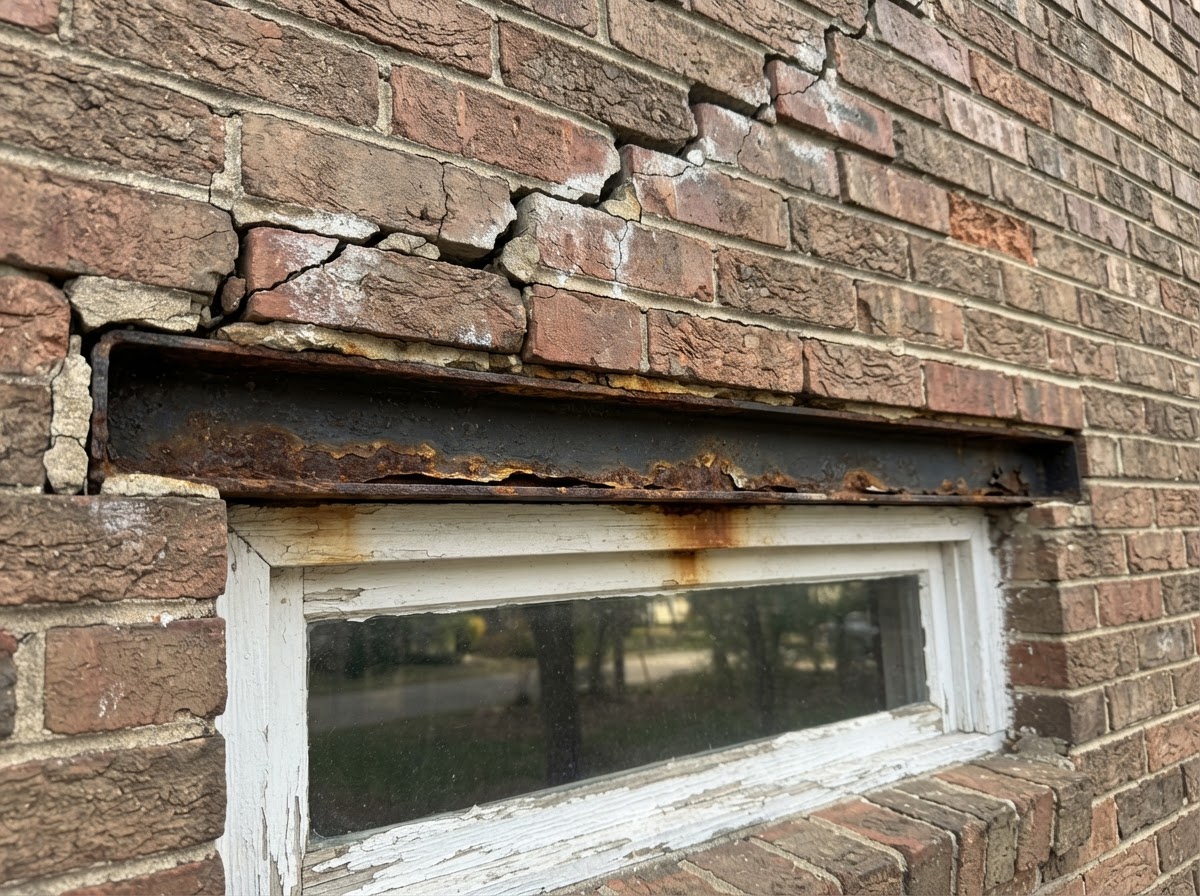
Masonry repair above windows and doors addresses the cracking, displacement, and joint failure that appears over openings on Ames brick buildings. It suits homes and commercial properties where the masonry above an opening has distressed but the support condition is still being evaluated.
The symptoms are assessed to determine whether the distress is lintel-related or from another cause, and the masonry repair scope is defined accordingly — which may include repointing cracked joints, replacing displaced brick, or rebuilding the masonry over the opening if the support condition requires it.
Owners get a repair matched to the diagnosed cause, with the masonry above the opening restored to sound condition and the support and water-management details addressed.
Corrosion-Related Brick and Mortar Repair
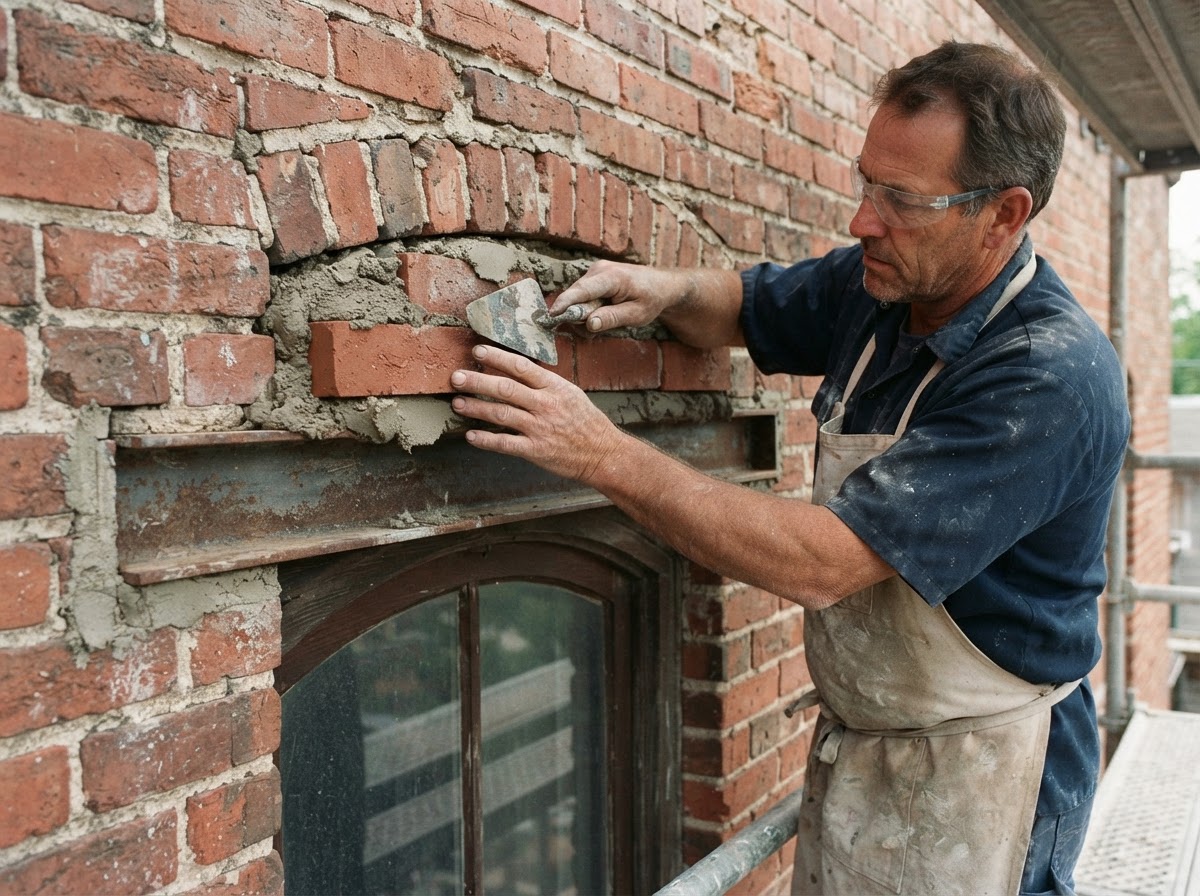
Corrosion-related brick and mortar repair addresses the masonry damage caused by rusting steel lintels that expand and push surrounding brick outward. It suits Ames openings where rust staining and displacement show that corrosion has begun disturbing the masonry.
The corrosion is addressed as part of the scope — which may involve exposing the lintel, treating or replacing corroded steel, and restoring the flashing and sealant that let water reach it — and the disturbed brick and mortar are repaired or rebuilt with compatible materials.
Owners stop the progressive masonry failure that expanding corrosion causes, with the steel protected against the water entry that drove the rust.
Selective Rebuilding Around Openings
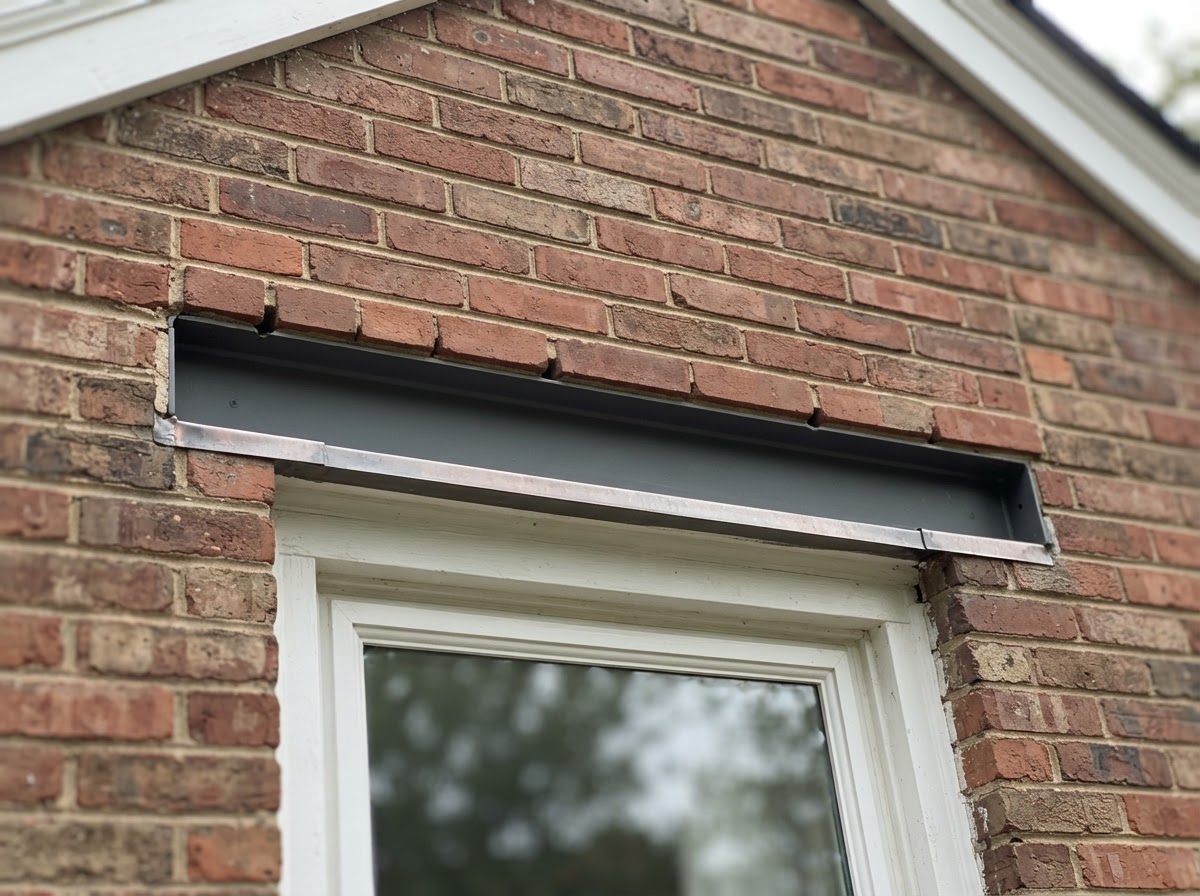
Selective rebuilding around openings rebuilds the masonry over a door or window where deterioration or support failure has progressed beyond localized repair. It suits Ames openings where brick has displaced significantly or the lintel condition requires exposing and rebuilding the masonry above.
The masonry is carefully dismantled as needed, the support condition is addressed, and the brick is rebuilt over the opening with compatible units, mortar matching, proper bearing, and restored flashing. The scope is defined by the actual structural condition, and permit or engineering requirements depend on that scope.
Owners get a structurally sound opening with masonry rebuilt on proper support, rather than brick held in place over a failing lintel.
Repointing and Water-Entry Detail Repair Around Lintels
Repointing and water-entry detail repair addresses the mortar joints and flashing or sealant details around openings that let water reach the lintel. It suits Ames openings where joint failure and detail deterioration are contributing to corrosion and masonry distress.
Failed mortar joints around the opening are repointed with compatible mortar, and the flashing and sealant transitions that shed water away from the lintel are inspected and corrected where within scope, so the water source driving the corrosion is addressed.
Owners get an opening where both the masonry joints and the water-management details are sound, protecting the lintel from the moisture that causes corrosion and the masonry distress that follows.
What Causes Lintel-Related Masonry Damage?
Corrosion and Rust Expansion
Steel lintels exposed to moisture corrode, and rust expands the steel — pushing the surrounding brick outward and opening joints above the opening. Corrosion-driven expansion is the most common cause of lintel-related masonry distress, and it is driven by water entry through failed flashing or sealant.
Water Entry Around Openings
Failed flashing, sealant, or mortar joints around windows and doors let water reach the steel lintel, driving corrosion. Water entry is the root cause of most lintel deterioration, so addressing the moisture source is essential to any lasting repair.
Aging Mortar and Movement
Mortar joints above openings age and fail over time, and thermal and structural movement can crack the masonry over a lintel even without corrosion. Movement-related cracking above an opening may or may not involve the lintel itself, and the evaluation distinguishes the two.
Inadequate or Deteriorated Support Conditions
Lintels that were undersized, poorly bearing, or have lost support over time can sag and crack the masonry above. Support-condition failures are structural and may require engineering input to define the correct repair, which depends on the actual condition.
What Are the Signs a Lintel Area Needs Evaluation?
Cracking Above Windows or Doors
Horizontal or stair-step cracking directly above a window or door is the most common sign of lintel-related distress. The cracking may indicate corrosion expansion, movement, or support failure, and it warrants professional evaluation to determine the cause before repair.
Rust Staining
Brown or orange rust staining on the brick or mortar above an opening, particularly at the lintel line, shows that the steel is corroding. Rust staining means moisture has reached the lintel and the corrosion that expands and disturbs masonry has begun.
Displaced or Bulging Brick Near an Opening
Brick that has shifted outward, bulged, or dropped above an opening indicates the masonry is being pushed or is losing support. Displacement is a sign of progressive failure that should be evaluated promptly, as it can worsen and become a safety concern.
Recurring Joint Failure Around the Opening
Mortar joints above an opening that have been repointed but crack again indicate an underlying movement or support issue rather than simple mortar deterioration. Recurring failure means the cause has not been addressed and the opening needs full evaluation.
How Does Lintel Repair Work?
Step 1: Inspect the Opening and Masonry Symptoms
The opening is inspected for cracking patterns, displacement, rust staining, joint failure, and the condition of the surrounding masonry and flashing. This evaluation determines whether the distress is lintel-related and whether support conditions are involved, which shapes the entire repair scope.
Step 2: Determine Whether Support Conditions Are Involved
The evaluation determines whether the lintel itself has corroded, sagged, or lost bearing, or whether the cracking is from another cause like settlement or movement. If support conditions are involved, the scope may include exposing and addressing the steel, which has structural implications.
Step 3: Define Masonry, Lintel, Flashing, and Permit Scope
The full scope is defined — which masonry needs repair or rebuilding, whether the lintel needs treatment or replacement, what flashing and sealant details need correction, and whether permits or engineering input are required for the structural scope. The scope depends on the actual diagnosed condition.
Step 4: Complete Qualified Repair/Rebuilding Work
The repair is completed by qualified parties according to the defined scope — addressing the steel condition where required, rebuilding masonry with compatible materials and proper bearing, and restoring the flashing and sealant that protect the lintel. Structural work is performed with the appropriate professional input where the scope requires it.
Step 5: Restore Joints and Review Water-Management Details
Mortar joints are repointed, sealant transitions are replaced, and the water-management details that let moisture reach the lintel are corrected so the corrosion does not recur. The finished opening is reviewed for both structural soundness and weathertightness.
How Much Does Lintel Repair Cost in Ames?
Lintel repair pricing depends on the opening width, number of openings, masonry removal and rebuild area, lintel condition, and access. Because this work has structural implications, the scope — and any permit or engineering requirements — drives the cost. An estimate gives a number tied to your specific opening.
Lintel Repair Pricing Basis
Lintel-related masonry repair: approximately $400–$1,500+ per opening
Depends on opening width, number of openings, masonry removal and rebuild area, lintel condition, access and height, brick matching, and flashing conditions. Corrosion extent and whether the steel itself needs treatment or replacement significantly affect the scope.
Multiple openings and access
Projects with multiple openings spread setup across more work. Elevated or hard-to-reach openings require scaffolding or lift access, which adds to labor and setup cost.
Cost Drivers
Corrosion and structural scope
The extent of corrosion, whether the lintel needs replacement versus treatment, and the masonry rebuild area over the opening drive cost. Structural scope determines whether engineering input is needed, which is a project cost factor.
Permit, engineering, and temporary support
Permit or engineering requirements depend on the actual structural scope, and temporary support handled by qualified parties where required is a cost factor. These requirements are identified during the evaluation and verified with the City of Ames where relevant.
Lintel repair with structural implications may require permits or engineering input, and that requirement depends on the actual scope. Verify project-specific requirements with the City of Ames before structural work begins.
Get Your Estimate
Tell us about your project. We respond to estimate requests for Ames, Nevada, Huxley, Story City, Iowa.
Frequently Asked Questions About Lintel Repair
What is a lintel in a masonry wall?
A lintel is the horizontal support — typically steel angle iron in brick veneer construction — that carries the masonry above a door, window, or other opening. The lintel transfers the weight of the masonry above the opening to the supports on either side, and when it corrodes or fails, the masonry above shows the distress.
What are signs of lintel failure or deterioration?
Signs of lintel failure include horizontal or stair-step cracking above an opening, rust staining at the lintel line, displaced or bulging brick, and mortar joints that fail repeatedly above the same opening. These symptoms indicate the lintel may be corroding, sagging, or losing support and warrant professional evaluation.
Why does rust form above some brick openings?
Rust forms above brick openings when moisture reaches the steel lintel through failed flashing, sealant, or mortar joints. The steel corrodes, and rust expands the metal — pushing the surrounding brick outward and opening joints, which is why rust staining and displacement often appear together above a window.
Is cracking above a window always caused by the lintel?
No, cracking above a window is not always caused by the lintel. Settlement, thermal movement, and other structural causes can crack masonry above an opening without involving the lintel, which is why the cracking is evaluated to determine the actual cause before repair is defined.
Can the brick around a damaged lintel be repaired?
Yes, the brick around a damaged lintel can be repaired, but the lintel condition itself must be addressed as part of the scope — treating or replacing corroded steel and restoring the flashing that let water reach it. Repairing only the brick without addressing the lintel means the damage will recur.
How much does lintel repair cost in Ames?
Lintel repair in Ames typically runs from about $400 to $1,500 or more per opening, depending on opening width, masonry rebuild area, lintel condition, corrosion extent, access, and whether the steel needs treatment or replacement. Structural scope and any permit or engineering requirements affect the total, and an estimate gives a number tied to your specific opening.
Does lintel repair require a permit or engineer?
Lintel repair may require a permit or engineering input when the scope involves structural support conditions, lintel replacement, or significant masonry rebuilding. The requirement depends on the actual scope, and where engineering or licensed specialty input is needed, that is identified during the evaluation and verified with the City of Ames.
What happens if movement above an opening is ignored?
If movement above an opening is ignored, the cracking and displacement can worsen as corrosion continues expanding the steel or as support deteriorates further. Progressive failure can lead to significant brick displacement and, in advanced cases, a safety concern, which is why symptoms above openings should be evaluated promptly rather than left to worsen.
Request Lintel Repair in Ames
Call Ames Masonry Pro at 515-715-4950 for lintel-related masonry repair in Ames, Nevada, Huxley, and Story City. 10+ years of masonry experience and insured service, with symptom-vs-cause evaluation and permit awareness.
Masonry Repair • Brick Repair • Masonry Wall Repair • Tuckpointing • Masonry Waterproofing • FAQs
Request an Estimate
Tell us about your project. We respond to estimate requests for Ames, Nevada, Huxley, Story City, Iowa.