Tuckpointing in Ames, IA | 10+ Years Experience
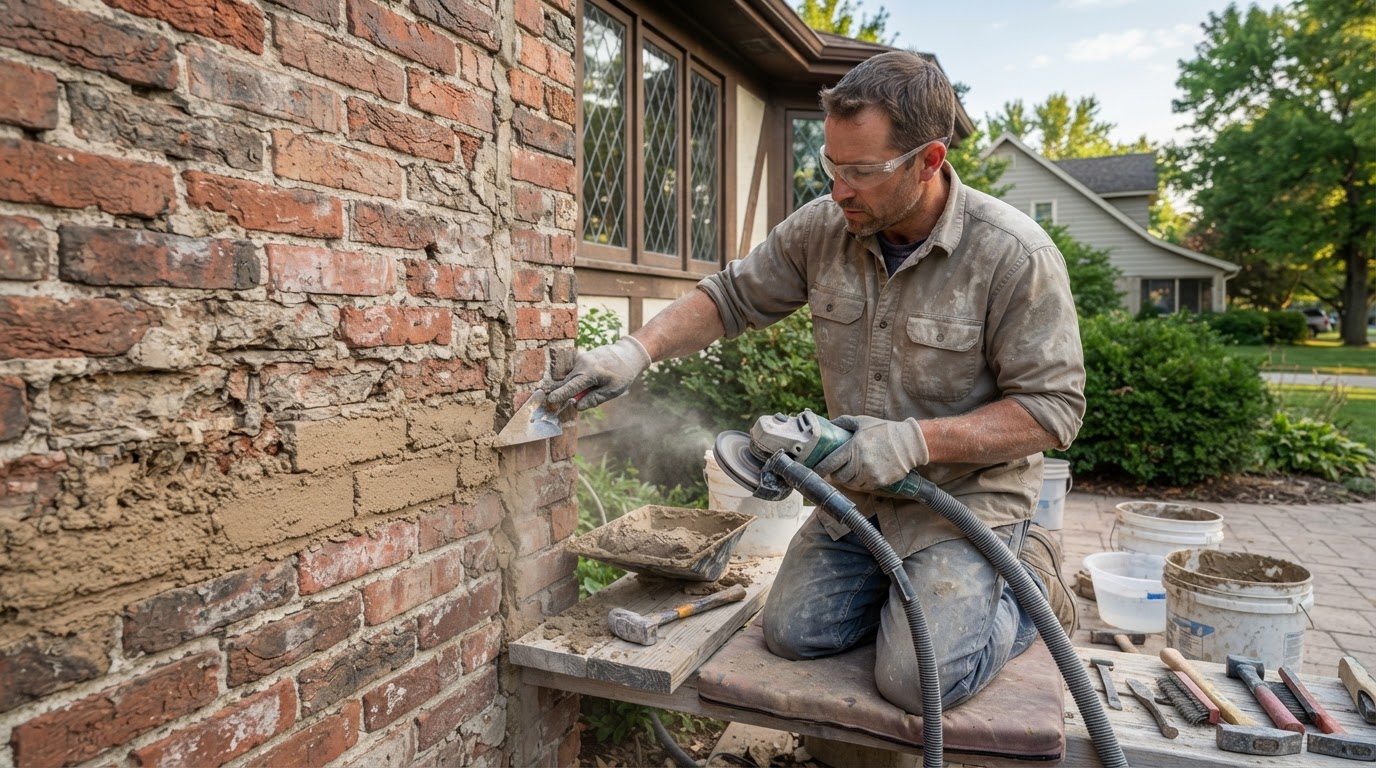
Ames Masonry Pro provides tuckpointing and repointing for deteriorated, cracked, recessed, powdering, and missing mortar joints on brick and stone masonry across Ames, Nevada, Huxley, and Story City. In customer language, tuckpointing is the repair of those failing joints; in trade terms, repointing is the physical renewal of deteriorated mortar — controlled removal of the failed mortar to proper depth and replacement with compatible mortar and the correct joint profile.
With 10+ years of hands-on masonry experience and insured service, every tuckpointing project evaluates the mortar and masonry condition, defines the repair area and joint depth, removes deteriorated mortar carefully, and places compatible replacement mortar tooled to match the existing joints. Central Iowa freeze-thaw exposure and moisture are the primary drivers of mortar deterioration here, and compatibility — not simply harder or stronger mortar — is what makes a repointing repair last. No DIY removal depths or grinder instructions are provided.
Request an Estimate
Tell us about your project. We respond to estimate requests for Ames, Nevada, Huxley, Story City, Iowa.
Why Choose Ames Masonry Pro for Tuckpointing in Ames?
10+ Years of Masonry Experience
More than a decade of tuckpointing work means joint conditions are read correctly — how deep the deterioration goes, which mortar is compatible, and which joints need full repointing versus localized repair. That experience ensures the repair addresses the actual joint condition rather than just surface-filling gaps.
Insured Service
Ames Masonry Pro is insured, giving property owners protection while tuckpointing work is underway on their home or commercial building. Insurance is part of doing the job responsibly across every repointing scope.
Controlled Joint Preparation
Deteriorated mortar is removed to proper depth with controlled methods and dust control where applicable, without damaging the surrounding brick. Proper joint preparation is what makes the new mortar bond and last — surface-filling over failed mortar does not hold.
Compatible Mortar Approach
Replacement mortar is matched to the existing mortar for composition, color, and hardness, because compatibility — not maximum strength — is what makes repointing last. Mortar that is too hard for the surrounding brick concentrates stress and causes new damage, so the right mortar is chosen for the wall.
Attention to Joint Profile and Finish
The replacement mortar is tooled to match the existing joint profile — whether the wall has flush, concave, weathered, or raked joints — so the repair blends visually and sheds water correctly. Matching the joint profile is what makes repointing invisible and weathertight.
Weather-Aware Scheduling and Transparent Pricing
Tuckpointing is scheduled with Central Iowa temperature, moisture, and curing conditions in mind, because mortar needs proper conditions to cure correctly. Property owners get clear pricing based on the actual wall area, joint condition, and access, with the locked benchmark applied honestly.
Our Tuckpointing and Repointing Services
Deteriorated Mortar Joint Repair
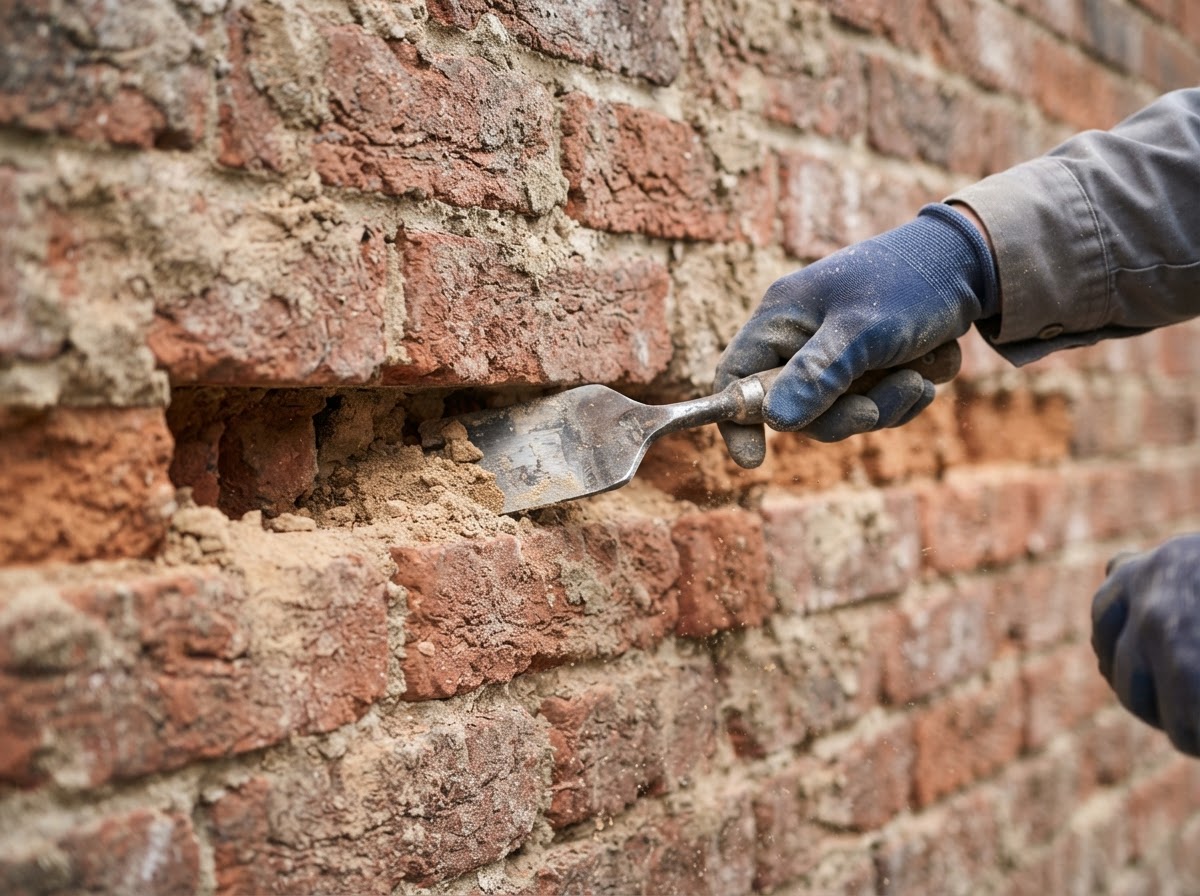
Deteriorated mortar joint repair renews the eroded, cracked, recessed, or powdering joints on Ames brick and stone walls. It suits masonry where the mortar has failed but the units themselves are sound and do not need replacement.
The failed mortar is raked out to proper depth, the joints are cleaned, and compatible replacement mortar matched to the existing color and composition is pressed in and tooled to the original joint profile, so the joints blend and shed water correctly.
Owners get a weathertight wall with restored joint integrity that protects the masonry from the water entry and freeze-thaw damage that failed joints allow.
Localized Tuckpointing
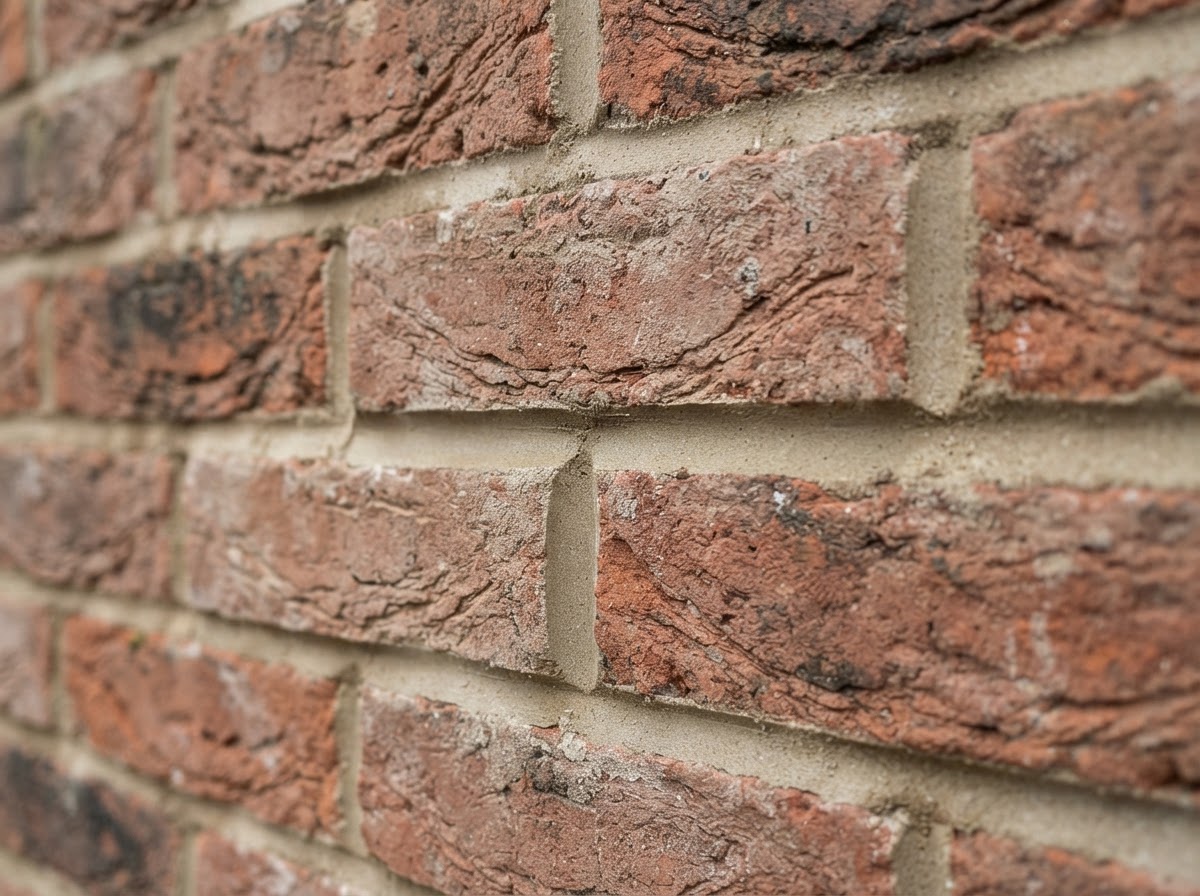
Localized tuckpointing addresses smaller areas of joint failure on Ames walls — a section of a facade, around an opening, or at a problem spot. It suits masonry where the deterioration is concentrated rather than wall-wide.
The affected joints are evaluated to confirm the failure is localized and not part of a broader condition, then repointed with compatible mortar and proper joint profile. The surrounding joints are inspected to ensure the localized repair integrates with the wall.
Owners get targeted repair of the problem area without the cost of repointing the entire wall, with the confidence that the surrounding joints have been checked for similar conditions.
Larger Wall Repointing
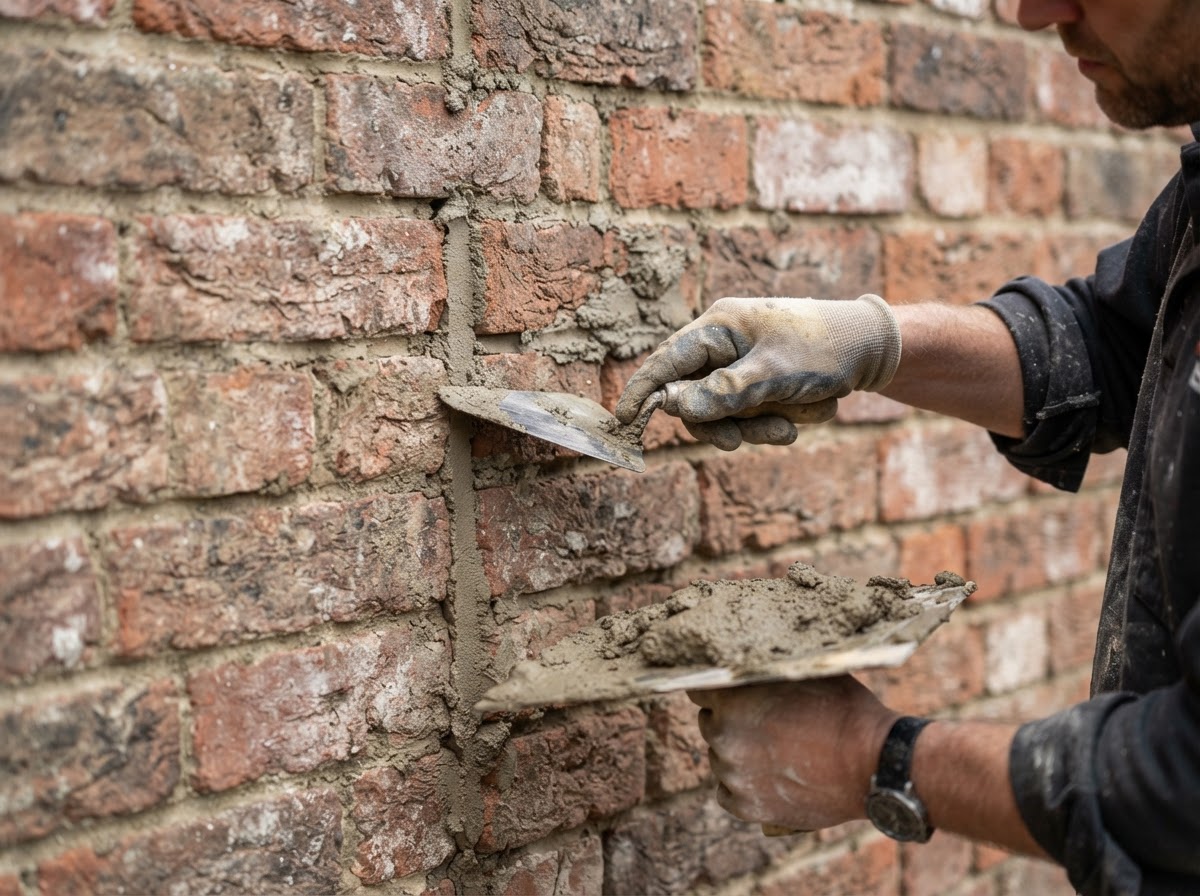
Larger wall repointing renews the mortar joints across a full wall or elevation on Ames brick and stone masonry. It suits walls where joint deterioration is widespread and localized repair no longer addresses the whole condition.
The full wall is evaluated, the joint condition is documented, and repointing is completed in sections with compatible mortar, proper depth, and consistent joint profile, with access and sequencing planned for the wall height and area.
Owners get a wall with uniformly sound joints that protect the entire masonry surface from water entry and freeze-thaw damage, extending the life of the wall.
Mortar Matching for Existing Masonry
Mortar matching selects a replacement mortar that is compatible with the existing masonry in composition, color, and hardness for Ames brick and stone walls. It is part of every repointing project and suits any wall where the new mortar must blend with existing joints.
The existing mortar is evaluated for composition and color, and a compatible replacement is formulated to match, so the new mortar performs correctly with the surrounding masonry and blends visually. Matching is close, with the understanding that aging can affect appearance.
Owners get repointing where the new mortar integrates with the existing joints rather than standing out, preserving the wall's appearance and ensuring the repair performs correctly.
What Causes Mortar Joints to Fail?
Age and Weather Exposure
Mortar joints naturally erode and deteriorate over years of exposure to rain, wind, and temperature cycling. Aging mortar loses its bond and begins to recede, crack, and powder, which is why older masonry eventually needs repointing even without a specific failure.
Freeze-Thaw Moisture Cycling
Moisture that enters mortar joints freezes and expands, breaking the mortar apart from within. Central Iowa freeze-thaw cycles are a primary accelerator of mortar deterioration, especially on walls with poor drainage or where joints have already begun to fail.
Incompatible Previous Mortar
Prior repointing with mortar that is too hard, too soft, or the wrong composition can fail faster than the original and damage surrounding brick. Hard mortar in soft brick joints concentrates stress and causes spalling, which is why compatibility matters in every repair.
Movement and Water Entry
Wall movement from settlement or thermal stress cracks mortar joints, and water entry through those cracks accelerates deterioration. Movement-related joint failure follows patterns that indicate the cause, and the movement must be evaluated before repointing or the new mortar will crack again.
What Are the Signs You Need Tuckpointing?
Recessed or Missing Mortar
Mortar joints that have receded below the brick face or are missing entirely have eroded and are no longer protecting the wall. Recessed or missing mortar is the clearest sign that repointing is needed, before water entry and freeze-thaw damage spread to the brick.
Crumbling or Powdering Joints
Mortar that crumbles when touched or powders at the surface has lost its bond and is deteriorating. Crumbling joints are failing and should be repointed, as they will continue to recede and admit water until the joints are renewed.
Gaps That Hold or Admit Water
Mortar joints with gaps that hold water after rain or admit water into the wall are failed and are causing moisture damage. Gaps that hold water indicate the joint is no longer shedding moisture, and repointing is needed to restore the wall's weathertightness.
Brick Edges Beginning to Deteriorate Near Failed Joints
When brick edges near failed joints begin to spall or deteriorate, the mortar failure has progressed to damaging the units. This is a sign that repointing is overdue and the damage is spreading from the joints to the brick itself.
How Does Tuckpointing Work?
Step 1: Evaluate Mortar and Masonry Condition
The mortar joints and the masonry units are evaluated to determine the extent of deterioration, the mortar composition, and whether any brick or stone also needs replacement. This evaluation defines the repair area, the joint depth needed, and the compatible mortar for the wall.
Step 2: Define Repair Area and Joint Depth
The repair area is defined — localized, wall-wide, or section — and the joint depth is determined based on how deep the deterioration goes. Proper depth is what allows the new mortar to bond and last, and it is set by the actual joint condition, not a one-size approach.
Step 3: Remove Deteriorated Mortar
Deteriorated mortar is removed to the defined depth with controlled methods and dust control where applicable, carefully and without damaging the surrounding masonry. Proper removal is the foundation of a lasting repair — mortar placed over failed material does not hold.
Step 4: Place Compatible Replacement Mortar
Compatible replacement mortar matched to the existing joints is mixed and pressed into the cleaned joints in layers, filling the full depth. The mortar is chosen for compatibility with the surrounding masonry, not maximum strength, so it performs correctly with the wall.
Step 5: Tool, Cure, and Clean the Joints
The mortar is tooled to match the existing joint profile, the joints are allowed to cure under appropriate conditions, and excess mortar is cleaned from the masonry faces. The finished joints blend with the wall and shed water correctly, with the work left clean.
How Much Does Tuckpointing Cost in Ames?
Tuckpointing in Ames is priced by the square foot, with the locked Iowa planning benchmark applied as a reference — not a fixed quote. The final price depends on wall height, access, joint condition, mortar matching, and the total area. An estimate gives a number tied to your specific wall.
Tuckpointing / Repointing Benchmark
Tuckpointing / repointing: approximately $7.86–$11.24 per sq. ft.
The locked Iowa planning benchmark for tuckpointing. This is a planning reference, not a fixed quote. Wall height and access, joint condition and depth, brick condition, mortar type and matching, intricate details, and total square footage move the final price within and beyond this range.
Small-area economics
Very small repair areas may carry a higher effective per-square-foot cost because setup, mobilization, and minimum scope apply. Larger wall repointing spreads those costs across more area. An estimate reflects the actual scope and area.
Cost Drivers
Access, height, and scaffolding
Wall height and access determine whether scaffolding or a lift is needed, which adds to labor and setup. Elevated or hard-to-reach walls cost more per square foot than ground-level work.
Joint condition and localized brick replacement
Joint depth and deterioration extent affect how much mortar must be removed and replaced. If damaged brick needs localized replacement alongside repointing, that adds to the scope. Mortar matching and intricate details around openings also move the price.
Tuckpointing itself typically does not require a permit, but if the work is part of a structural wall repair, permit requirements may apply. Verify project-specific requirements with the City of Ames where relevant.
Get Your Estimate
Tell us about your project. We respond to estimate requests for Ames, Nevada, Huxley, Story City, Iowa.
Frequently Asked Questions About Tuckpointing
How much does tuckpointing cost in Ames?
Tuckpointing in Ames runs approximately $7.86 to $11.24 per square foot as a planning benchmark, with the final price depending on wall height and access, joint condition and depth, mortar matching, and total area. Small areas may carry a higher effective rate due to setup. An on-site estimate is needed for exact pricing.
What is the difference between tuckpointing and repointing?
In everyday use, tuckpointing and repointing both refer to repairing deteriorated mortar joints. In trade terms, repointing is the physical process of removing failed mortar to proper depth and replacing it with compatible mortar, while tuckpointing is the customer-facing term for that same renewal. Both renew the joints that protect the masonry.
How do I know mortar joints need repair?
Mortar joints need repair when they are recessed, missing, crumbling, powdering, or holding water. If you can see gaps in the joints, the mortar is soft when touched, or water is entering the wall, repointing is needed before the deterioration spreads to the brick or stone units.
Can failing mortar damage brick?
Yes, failing mortar joints allow water to enter the wall, and that moisture damages the brick through freeze-thaw spalling and saturation. When brick edges near failed joints begin to deteriorate, the mortar failure has progressed to damaging the units, which is why repointing should not be deferred.
Can replacement mortar match existing mortar?
Replacement mortar can be closely matched to existing mortar in composition, color, and hardness, though an exact invisible match is not always possible because existing mortar has aged and weathered. Compatible mortar is chosen to perform correctly with the surrounding masonry and blend visually within the limits of aging.
How long does tuckpointing last?
The lifespan of tuckpointing depends on the materials used, the exposure, the drainage, the workmanship, and ongoing maintenance. Properly done repointing with compatible mortar lasts many years, but no specific lifespan is guaranteed because Central Iowa weather and wall conditions vary. Periodic inspection helps catch new joint deterioration early.
Can tuckpointing be done in cold Iowa weather?
Tuckpointing in cold weather depends on temperature, moisture, and the mortar product's curing requirements, because mortar needs proper conditions to cure correctly. Cold-weather repointing may require specific methods or scheduling adjustments, and the work is planned with those conditions in mind rather than forced against them.
Should damaged brick be replaced before repointing?
Yes, damaged brick should be replaced before or as part of repointing, so the new mortar joints are placed around sound units. Repointing around spalled or cracked brick that needs replacement means the joints will be disturbed again when the brick is replaced, so the two are coordinated in the same scope.
Request Tuckpointing in Ames
Call Ames Masonry Pro at 515-715-4950 for tuckpointing and repointing in Ames, Nevada, Huxley, and Story City. 10+ years of masonry experience and insured service, with compatible mortar and proper joint preparation.
Masonry Repair • Brick Repair • Masonry Restoration • Masonry Waterproofing • FAQs
Request an Estimate
Tell us about your project. We respond to estimate requests for Ames, Nevada, Huxley, Story City, Iowa.