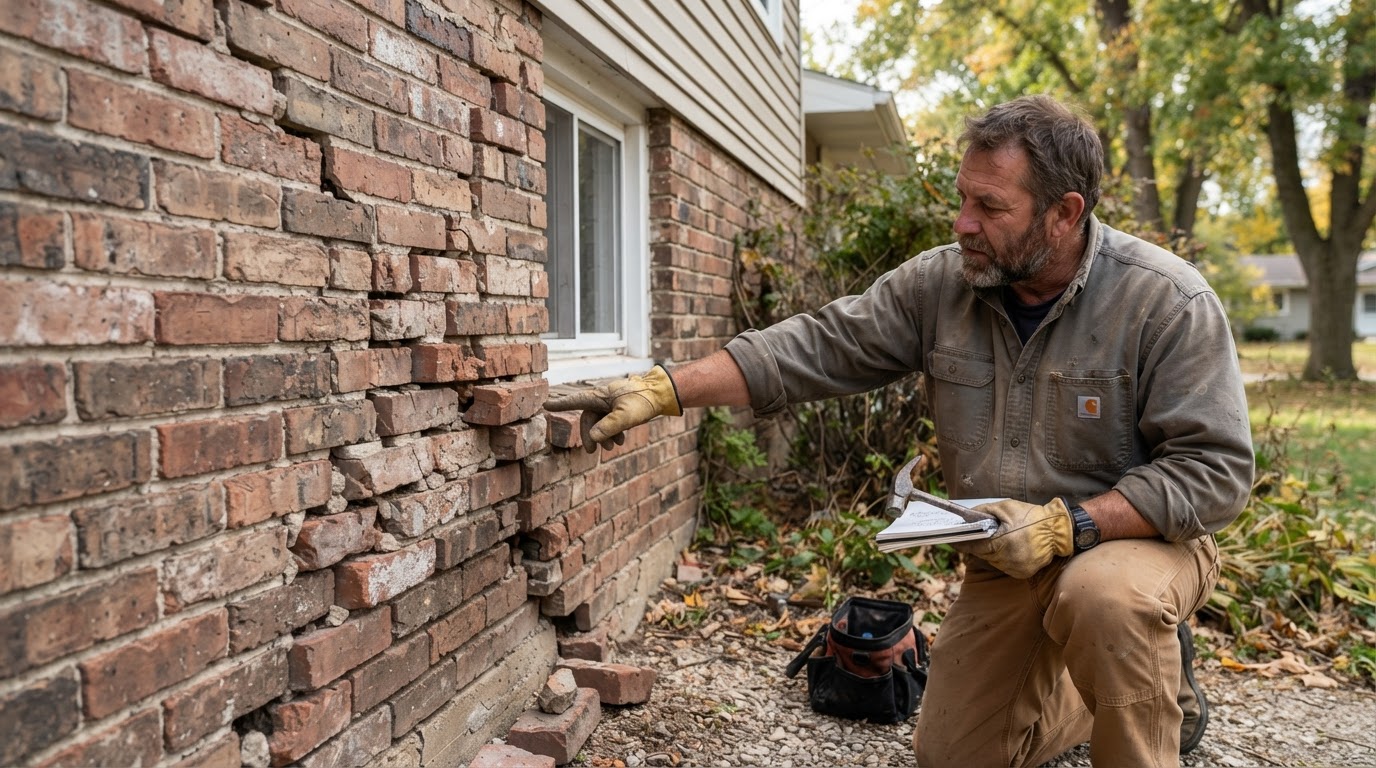
Masonry Wall Repair in Ames, IA | 10+ Years Experience
Ames Masonry Pro repairs cracked, loose, displaced, deteriorated, and locally failed masonry walls for residential and commercial properties across Ames, Nevada, Huxley, and Story City. Whether a brick wall shows stair-step cracking from settlement, a CMU wall has bulged from drainage failure, or a section has loosened from impact or age, the correct repair depends on the failure mechanism — and diagnosing that mechanism is the first step, not patching the visible crack.
With 10+ years of hands-on masonry experience and insured service, every wall repair evaluates the wall and surrounding conditions, identifies the likely failure mechanism, and defines whether the repair involves units, mortar, movement joints, drainage, support, or partial rebuilding. This work has structural and safety implications, so permit or engineering requirements depend on the actual scope. No shoring, demolition, bracing, or structural modification instructions are provided to property owners.
Request an Estimate
Tell us about your project. We respond to estimate requests for Ames, Nevada, Huxley, Story City, Iowa.
Why Choose Ames Masonry Pro for Masonry Wall Repair in Ames?
10+ Years of Masonry Experience
More than a decade of masonry work informs how each wall is evaluated — reading crack patterns to distinguish settlement from movement, drainage failure, or support loss. That experience means the repair matches the failure mechanism rather than just patching the visible crack.
Insured Service
Ames Masonry Pro is insured, giving property owners protection while masonry wall repair is underway on their home or commercial building. Insurance is part of doing the job responsibly on work with structural implications.
Cause-First Evaluation
Before any repair is defined, the wall and surrounding conditions are evaluated to identify the failure mechanism — settlement, water intrusion, movement, corrosion, or drainage. Different mechanisms call for different repairs, and a correct diagnosis is what prevents the damage from recurring.
Repair-vs-Rebuild Judgment
Not every damaged wall needs rebuilding, and not every crack is cosmetic. The evaluation determines whether localized repair, repointing, movement-joint installation, drainage correction, or partial rebuilding is appropriate, so the scope matches the actual condition.
Multiple Masonry Materials
Wall repair covers brick, CMU, and stone masonry, each with different failure modes and repair methods. Experience across these materials means the repair uses the right approach and compatible materials for the specific wall type.
Movement, Moisture, and Permit Awareness
Movement and moisture are the most common drivers of wall damage, and addressing them is part of the repair. Where the scope has structural implications, permit or engineering requirements are identified and verified with the City of Ames, so the work proceeds with the right professional input.
Our Masonry Wall Repair Services
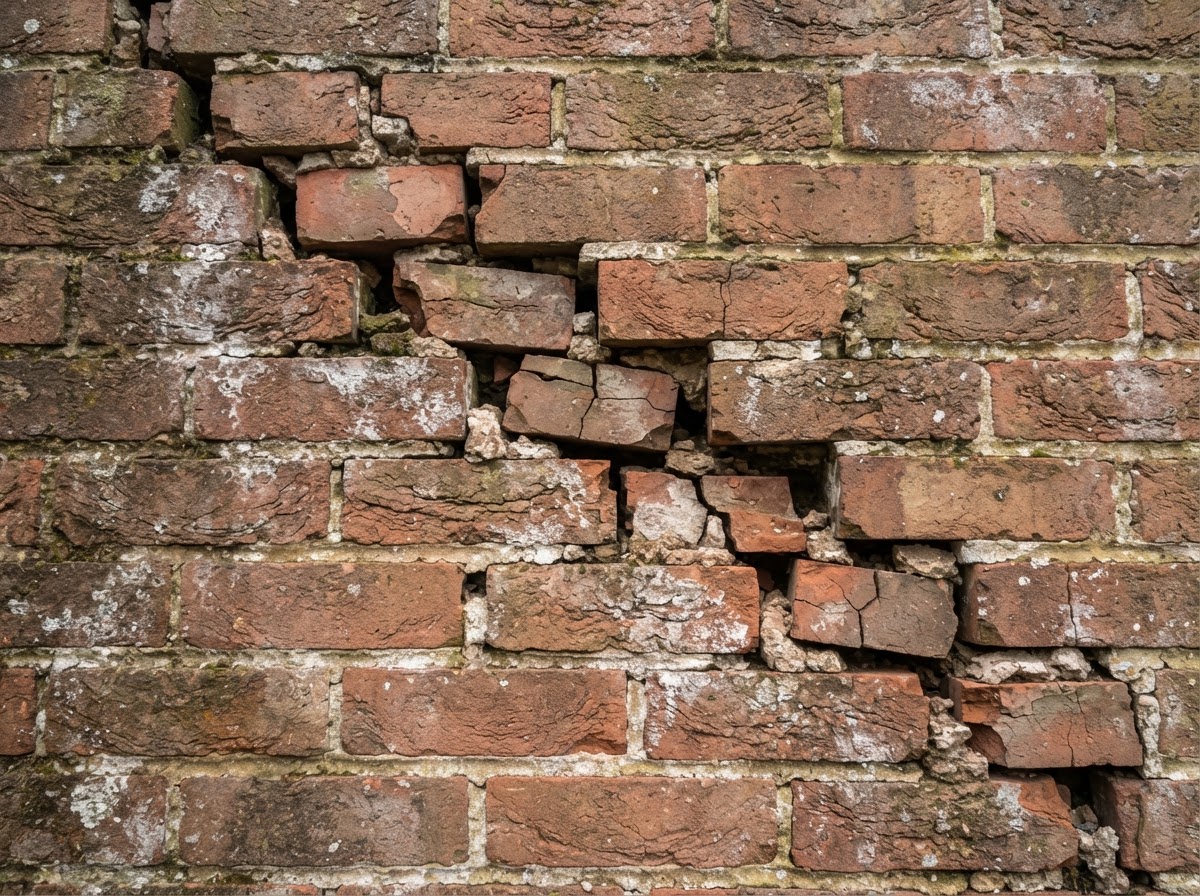
Cracked Masonry Wall Repair
Cracked masonry wall repair addresses stair-step, vertical, and horizontal cracking in brick, CMU, and stone walls on Ames properties. It suits walls where cracking has appeared from settlement, movement, or thermal stress and the cause is being evaluated.
The crack pattern is evaluated to determine the failure mechanism, and the repair is defined accordingly — which may include repointing cracked joints, replacing cracked units, installing movement joints, or addressing the settlement or drainage cause. The repair matches the diagnosed mechanism rather than just filling the crack.
Owners get a wall where the cracking is repaired and the cause addressed, rather than a patched crack that reopens when the underlying movement continues.
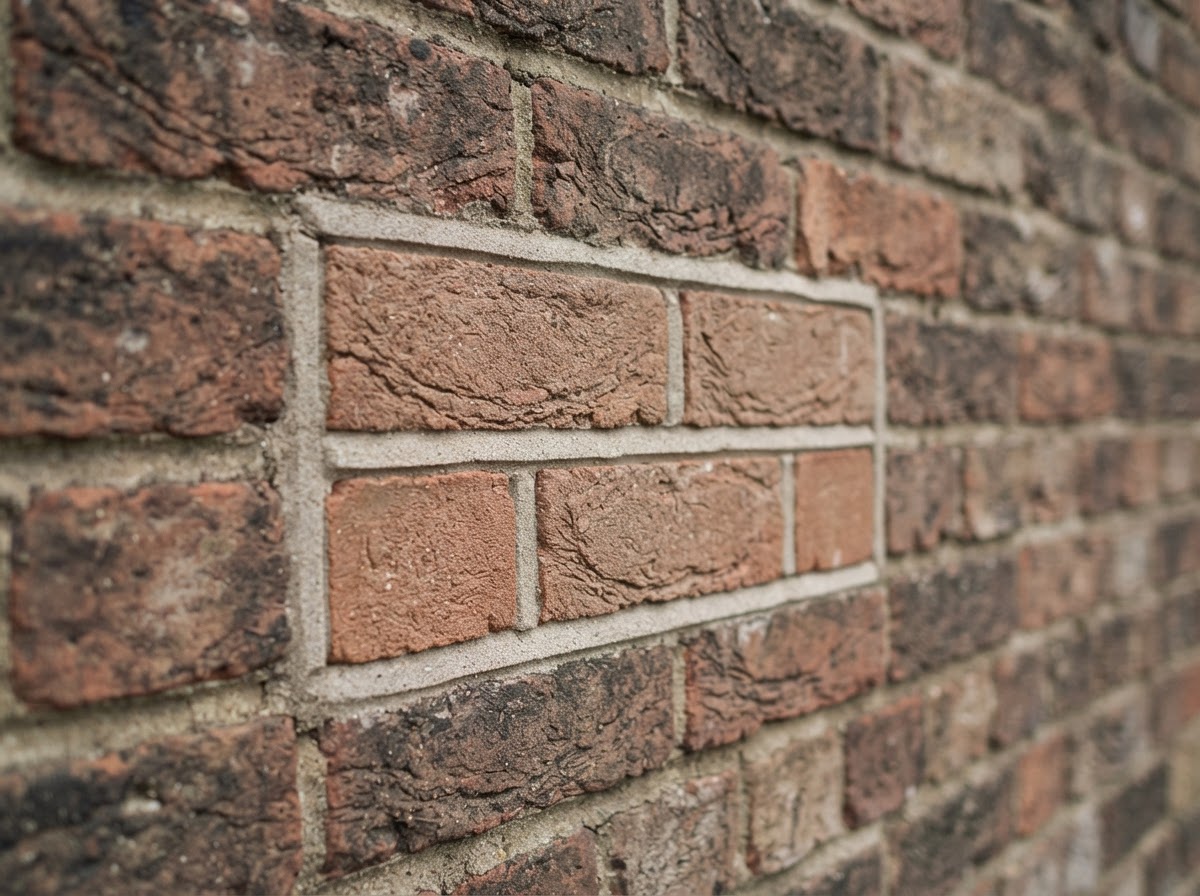
Loose or Displaced Brick/Block Repair
Loose or displaced brick and block repair stabilizes units that have shifted, rotated, or pulled out of plane on Ames masonry walls. It suits walls where mortar has failed around units or movement has pushed masonry out of alignment.
The affected section is assessed for support and movement conditions before the loose units are reset or the section selectively rebuilt with compatible mortar and proper bearing. Surrounding joints are repointed to secure the reset units and seal the wall.
Owners regain a plumb, stable wall with masonry firmly set in sound mortar, eliminating the safety and water-entry hazards that loose or displaced units create.
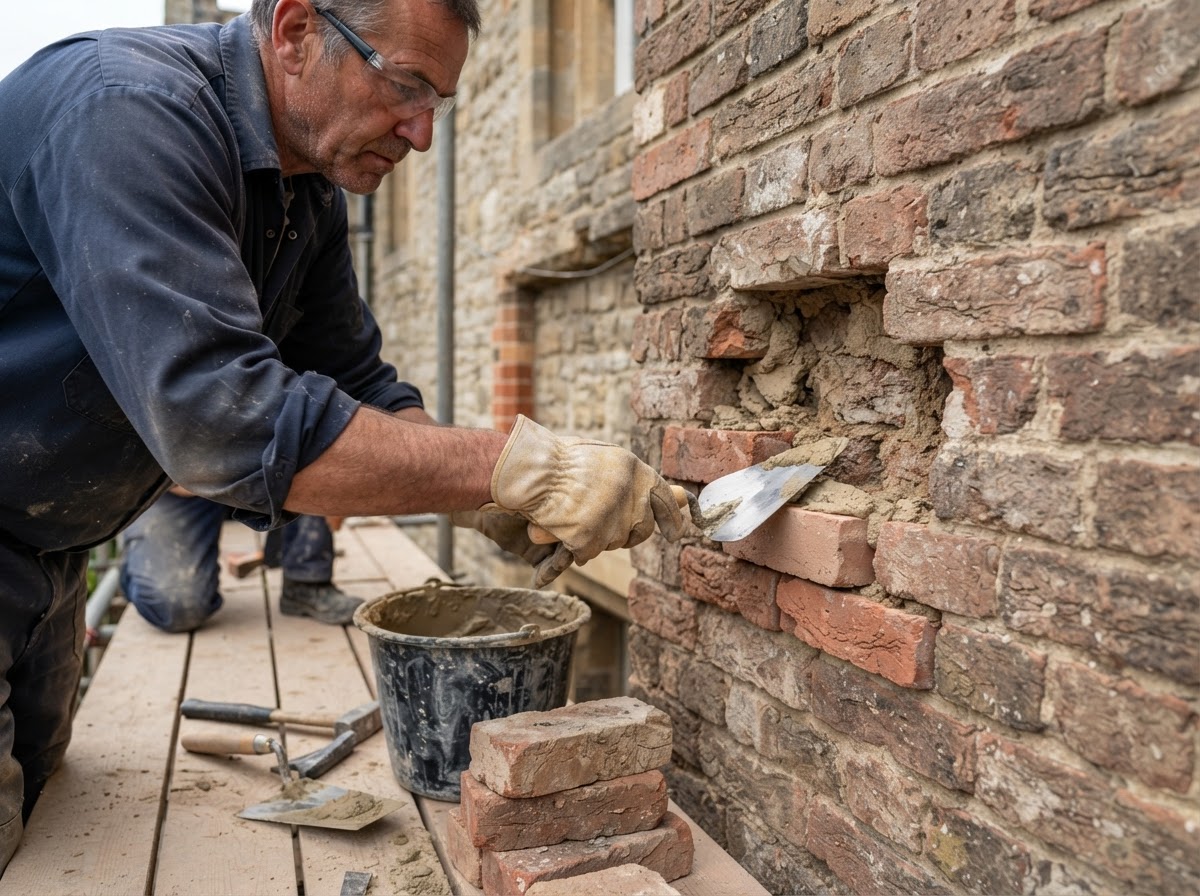
Localized Masonry Wall Rebuilding
Localized masonry wall rebuilding rebuilds a section of wall that has failed beyond localized repair — from impact damage, severe deterioration, or structural movement. It suits Ames walls where a portion needs to be dismantled and rebuilt rather than patched.
The failed section is carefully dismantled, the cause — drainage, movement, support — is addressed where within scope, and the wall is rebuilt with compatible units, mortar matching, proper reinforcement or movement joints as required, and correct bearing. Permit or engineering requirements depend on the structural scope.
Owners get a structurally sound wall section rebuilt on proper support, with the cause of the failure addressed so the rebuilt section does not fail the same way.
Mortar Joint and Water-Entry Repairs
Mortar joint and water-entry repairs address the failed mortar and moisture paths that often drive wall deterioration on Ames properties. It suits walls where joint failure and water intrusion are contributing to cracking, spalling, or displacement.
Failed mortar joints are repointed with compatible mortar, cracks that admit water are repaired, and the drainage or flashing conditions that let moisture reach the wall are addressed where within scope, so the water source driving the deterioration is corrected.
Owners get a wall where both the joints and the water-entry paths are corrected, protecting the masonry from the moisture and freeze-thaw damage that caused the deterioration.
What Causes Masonry Wall Damage?
Settlement or Building Movement
Foundation settlement, soil movement, and structural movement crack masonry walls as the wall adjusts to shifting support. Settlement cracking typically follows mortar joints in a stair-step pattern and may indicate an underlying soil or foundation issue that needs to be understood before the wall is repaired.
Water Intrusion and Freeze-Thaw Exposure
Water entering through failed joints, cracks, or drainage failures saturates the masonry, then freezes and expands — causing spalling, cracking, and progressive deterioration. Central Iowa freeze-thaw cycles make water intrusion a primary driver of wall damage.
Failed Mortar or Deteriorated Units
Mortar joints that have eroded, cracked, or receded no longer bond the masonry units securely, and deteriorated brick or block can loosen and shift. Failed mortar and units reduce the wall's structural integrity and create paths for water entry that accelerate damage.
Corrosion, Support, or Drainage Problems
Corroding embedded steel like lintels or reinforcement, deteriorated support conditions, and drainage failures behind walls can all cause cracking, displacement, and bulging. These are structural causes that require evaluation to define the correct repair, which may involve engineering input.
What Are the Signs a Masonry Wall Needs Professional Evaluation?
New or Widening Cracks
Cracks that have appeared recently or are visibly widening indicate active movement or deterioration. New or widening cracks — particularly stair-step or horizontal patterns — warrant professional evaluation to determine the cause before the damage progresses.
Bulging or Out-of-Plane Masonry
A wall that is bulging, bowing, or has masonry pushed out of plane has lost integrity and may be unstable. Bulging is a serious sign that warrants prompt professional evaluation, as it can indicate support, drainage, or structural failure behind the wall.
Loose or Falling Units
Brick, block, or stone that is loose, shifting, or has fallen out of the wall is a safety and water-entry hazard. Loose or falling units indicate failed mortar or movement and should be evaluated and stabilized promptly.
Recurring Repairs in the Same Area
When the same wall section has been repaired multiple times and the damage keeps returning, the underlying cause has not been addressed. Recurring repairs mean the wall needs full evaluation to identify and correct the failure mechanism driving the damage.
How Does Masonry Wall Repair Work?
Step 1: Inspect the Wall and Surrounding Conditions
The wall is inspected for crack patterns, displacement, loose units, mortar condition, and signs of water entry or movement, and the surrounding conditions — drainage, settlement, support — are evaluated. This inspection identifies the likely failure mechanism, which shapes the entire repair scope.
Step 2: Identify Likely Failure Mechanism
The symptoms are evaluated to determine the failure mechanism — settlement, water intrusion, movement, corrosion, drainage, or deteriorated units. Different mechanisms call for different repairs, and identifying the cause is what prevents the damage from recurring after repair.
Step 3: Define Repair vs Rebuild and Any Required Professional Review
The scope is defined — whether the repair involves repointing, unit replacement, movement joints, drainage correction, or partial rebuilding — and whether the structural scope requires engineering input or permits. Professional review is identified where the failure mechanism or scope warrants it.
Step 4: Complete Masonry Repair With Compatible Materials
The repair is completed using compatible units, mortar matching, reinforcement or movement joints as the scope requires, and proper bearing and drainage details. Materials and methods are chosen for the specific wall type and the diagnosed failure mechanism.
Step 5: Restore Joints and Review Contributing Water/Movement Conditions
Mortar joints are repointed, the wall is left weathertight, and the contributing conditions — water entry, drainage, movement — that drove the damage are reviewed and addressed where within scope. The finished wall is sound and the cause is documented so the owner understands what to monitor.
How Much Does Masonry Wall Repair Cost in Ames?
Masonry wall repair pricing depends on wall area, masonry type, the number of damaged units, repointing area, access, and whether the repair involves movement, drainage, or structural scope. The locked tuckpointing benchmark applies to repointing portions. An estimate gives a number tied to your specific wall.
Repointing Portion
Repointing as part of wall repair: ~$7.86–$11.24 per sq. ft.
The locked Iowa planning benchmark applies to the repointing portion of the wall repair. Joint depth, mortar matching, wall height, and access move this portion of the cost.
Wall Repair Cost Drivers
Wall area, units, and masonry type
Cost depends on wall area, the number of damaged units needing replacement, masonry type (brick, CMU, stone), demolition, replacement material, and repointing area. Natural stone typically costs more than brick or CMU.
Movement, drainage, and structural scope
Movement or support conditions, drainage and flashing correction, height and access, and any permit or engineering requirements where the scope triggers them all move the total. Structural repair totals are not invented — an on-site estimate is needed for exact pricing.
Masonry wall repair with structural implications — movement, support, or partial rebuilding — may require permits or engineering input. Verify project-specific requirements with the City of Ames before structural work begins.
Get Your Estimate
Tell us about your project. We respond to estimate requests for Ames, Nevada, Huxley, Story City, Iowa.
Frequently Asked Questions About Masonry Wall Repair
How much does masonry wall repair cost in Ames?
Masonry wall repair cost depends on wall area, masonry type, number of damaged units, repointing area, access, demolition, replacement material, and whether the repair involves movement, drainage, or structural scope. Repointing portions run about $7.86–$11.24 per square foot, and an on-site estimate is needed for exact pricing tied to your wall.
What causes stair-step cracks in masonry?
Stair-step cracks in masonry usually follow the mortar joints and are caused by settlement, movement, or support issues that stress the wall. The cracking pattern indicates the wall is adjusting to shifting support or movement, and the underlying cause needs to be evaluated before the crack is repaired.
Is a bulging brick wall dangerous?
A bulging brick wall can be a safety concern, as it indicates the wall has lost integrity and may be unstable. Bulging warrants prompt professional evaluation to determine the cause — which may involve support, drainage, or structural failure — and to define the appropriate repair before the condition worsens.
Can part of a masonry wall be rebuilt without replacing the whole wall?
Yes, part of a masonry wall can often be rebuilt without replacing the whole wall, when the failure is localized and the surrounding masonry is structurally sound. The failed section is dismantled and rebuilt with compatible materials, and the cause of the failure is addressed so the rebuilt section does not fail the same way.
Is every masonry crack structural?
No, not every masonry crack is structural. Some cracks are cosmetic — from minor settlement, thermal movement, or material aging — while others indicate active movement, support failure, or drainage problems. The crack pattern and surrounding conditions are evaluated to determine whether the cause is cosmetic or structural before repair is defined.
Can failed mortar cause wall damage?
Yes, failed mortar joints reduce the wall's structural integrity and create paths for water entry that accelerate deterioration of the masonry units. Repointing failed mortar is often part of wall repair, both to restore the wall's bond and to seal it against the water intrusion that drives further damage.
Does masonry wall repair require a permit?
Masonry wall repair may require a permit when the scope involves structural movement, support conditions, or partial rebuilding. The requirement depends on the actual scope, and where structural work is involved, permit or engineering requirements are verified with the City of Ames before work begins.
When should a masonry wall be evaluated promptly?
A masonry wall should be evaluated promptly when there is loose or falling masonry, significant bulging or out-of-plane movement, or actively widening cracks. These symptoms indicate progressive or potentially unstable conditions that warrant professional evaluation before they worsen, rather than waiting for the next convenient time.
Request Masonry Wall Repair in Ames
Call Ames Masonry Pro at 515-715-4950 for masonry wall repair in Ames, Nevada, Huxley, and Story City. 10+ years of masonry experience and insured service, with cause-first evaluation and permit awareness.
Masonry Repair • Brick Repair • Tuckpointing • Lintel Repair • Masonry Waterproofing • Retaining Wall Repair • FAQs
Request an Estimate
Tell us about your project. We respond to estimate requests for Ames, Nevada, Huxley, Story City, Iowa.