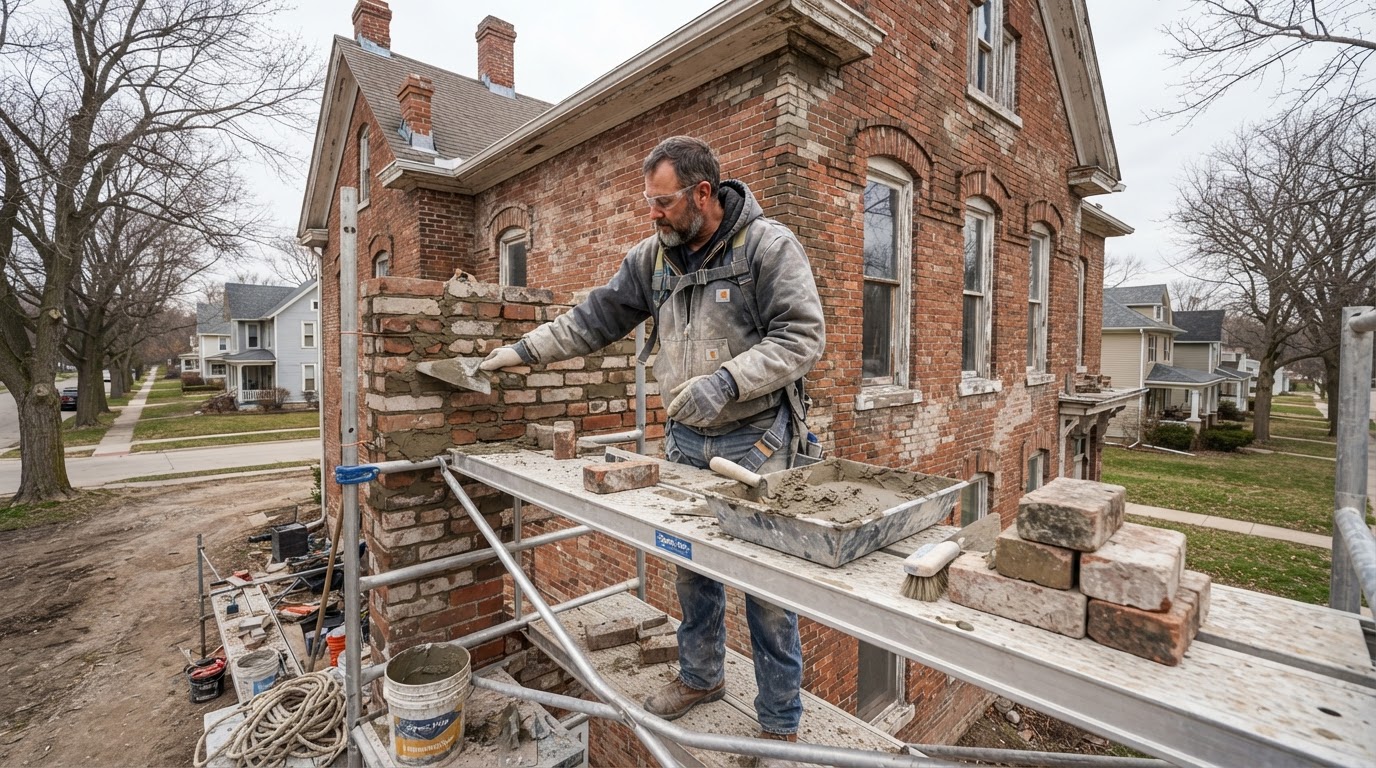
Masonry Restoration in Ames, IA | 10+ Years Experience
Ames Masonry Pro restores deteriorated masonry for residential and commercial properties across Ames, Nevada, Huxley, and Story City. Restoration is broader than a single isolated repair — it may combine brick and stone replacement, mortar renewal, cleaning, sealant correction, and moisture-detail work to preserve sound existing masonry while correcting the conditions that caused deterioration. The goal is to keep what is sound and repair what has failed, not to replace everything.
With 10+ years of hands-on masonry experience and insured service, every restoration project identifies which materials can remain, repairs the failed units and joints, and corrects the contributing moisture and detail problems where within scope. Ames contexts include older, weathered brick facades, residential masonry, chimney and exterior details, and commercial masonry. No historic-preservation certification is claimed, and not every older building is treated as historic — restoration is about sound repair, not a designation.
Request an Estimate
Tell us about your project. We respond to estimate requests for Ames, Nevada, Huxley, Story City, Iowa.
Why Choose Ames Masonry Pro for Masonry Restoration in Ames?
10+ Years of Masonry Experience
More than a decade of restoration work means deteriorated masonry is read correctly — which units can remain, which need replacement, and which moisture or detail problems drove the deterioration. That experience ensures the restoration preserves sound masonry rather than defaulting to full replacement.
Insured Service
Ames Masonry Pro is insured, giving property owners protection while masonry restoration is underway on their home or commercial building. Insurance is part of doing the job responsibly across multi-scope restoration projects.
Preservation-First Scope
Restoration begins with identifying what is sound and what has failed, so sound masonry is preserved and only deteriorated material is repaired or replaced. This keeps the scope focused and cost-effective while still correcting the conditions that caused the deterioration.
Compatible Repair Materials
Replacement brick, stone, and mortar are selected for compatibility with the existing masonry in composition, color, and hardness. Compatible materials ensure the restoration performs correctly with the surrounding masonry and blends visually, within the limits of available matching material.
Multi-Condition Diagnosis
Restoration addresses multiple deterioration types in one area — failed mortar, spalled brick, staining, sealant failure — and diagnoses how they relate. Understanding the connections between conditions is what makes a restoration address the whole problem rather than treating symptoms in isolation.
Transparent Phased Scope and Clear Estimate
Restoration scope is explained in phases — what will be repaired, repointed, cleaned, or corrected — with honest pricing context for each portion. Property owners understand what the restoration involves and what drives the cost, with the locked benchmark applied to repointing portions.
Our Masonry Restoration Services
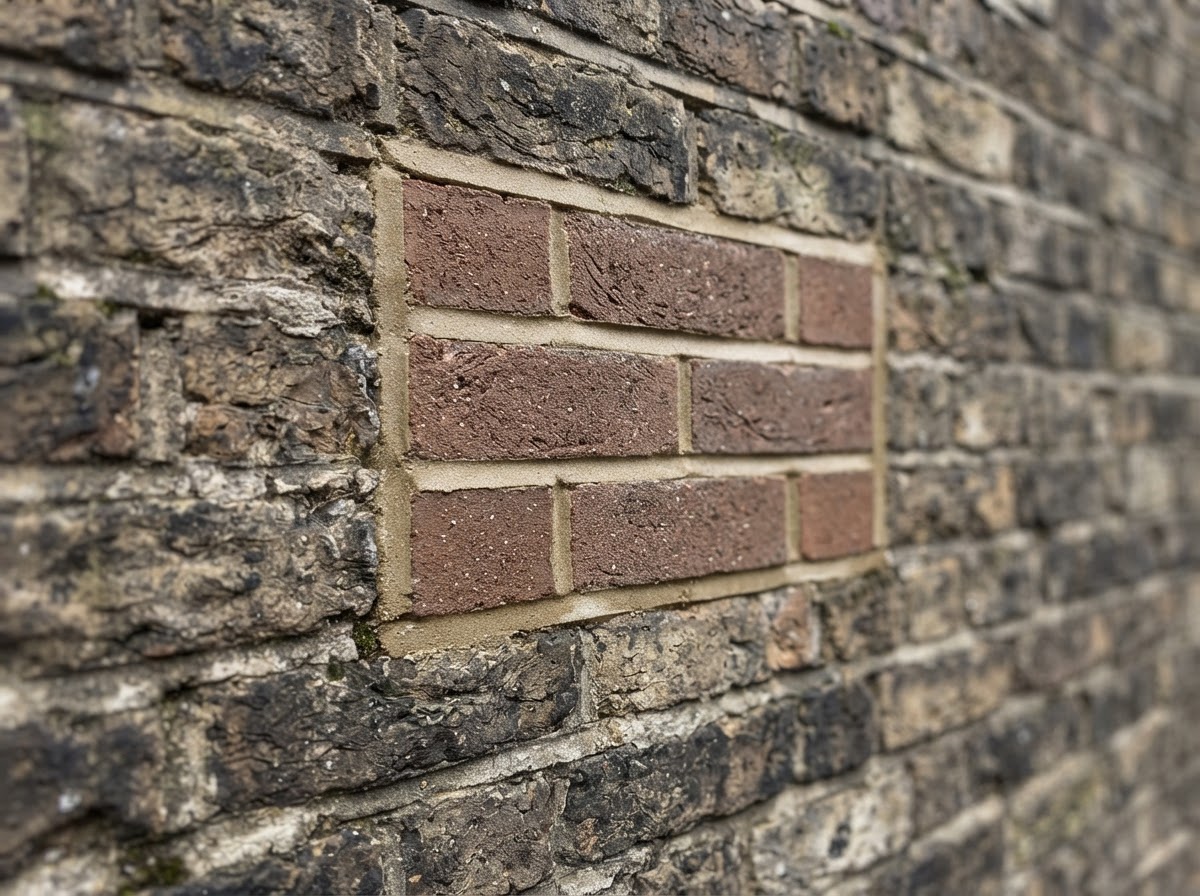
Brick and Mortar Restoration
Brick and mortar restoration renews deteriorated brick units and failed mortar joints on Ames residential and commercial masonry. It suits walls where both the units and the joints have deteriorated and a combined repair is needed rather than isolated work.
Spalled and cracked brick are selectively replaced with compatible units, and failed mortar joints are repointed with matched mortar and proper joint profile, so the restoration addresses both the units and the joints in a coordinated scope.
Owners get a wall with sound brick and mortar restored together, eliminating the mixed conditions that isolated repairs leave behind and protecting the masonry from further deterioration.
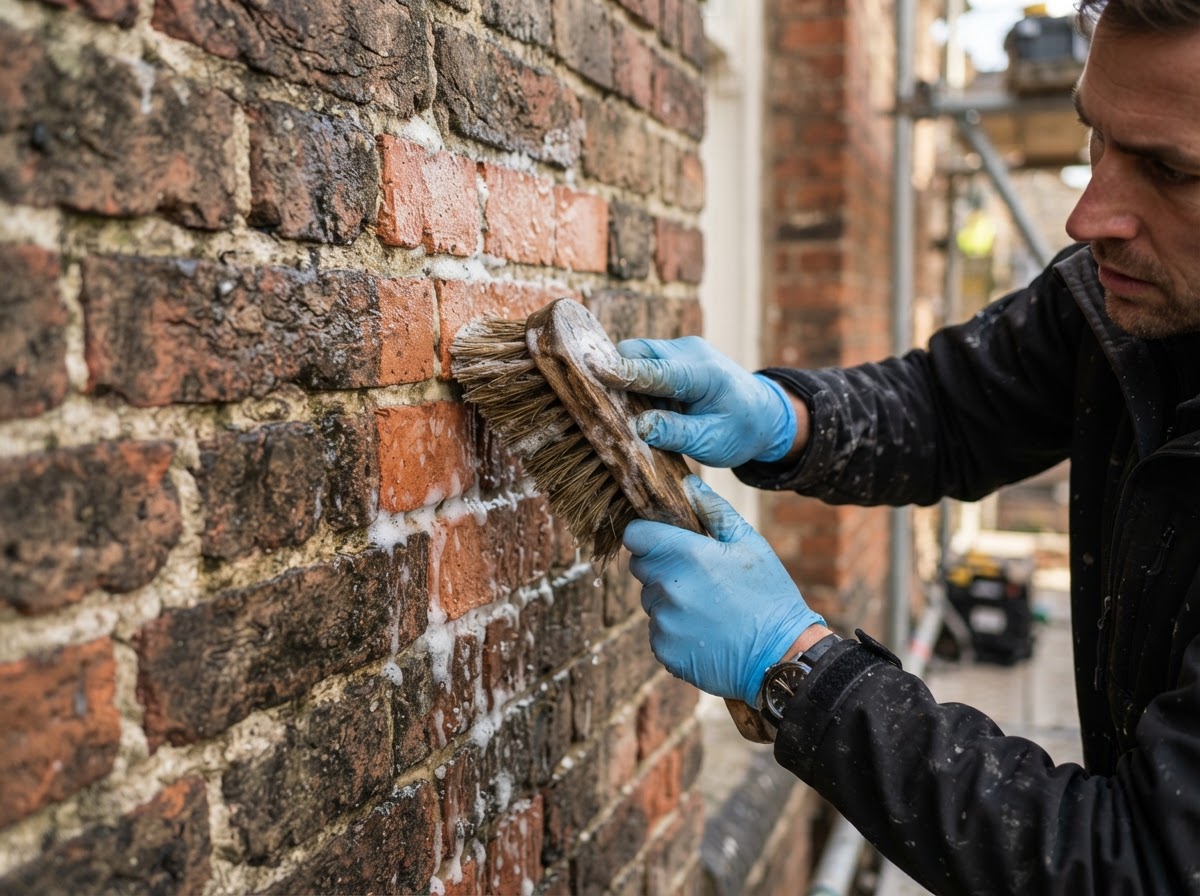
Selective Masonry Unit Replacement
Selective masonry unit replacement replaces the specific brick or stone units that have failed on Ames walls, preserving the sound masonry around them. It suits restoration where individual units have spalled, cracked, or deteriorated but the wall is otherwise structurally sound.
The failed units are carefully removed, compatible replacement units are selected to match the existing material, and the new units are set in matched mortar with proper joint tooling, so the replacement blends with the surrounding masonry.
Owners get deteriorated units replaced without full-wall replacement, preserving the sound masonry and restoring the wall's appearance and integrity at a focused scope.
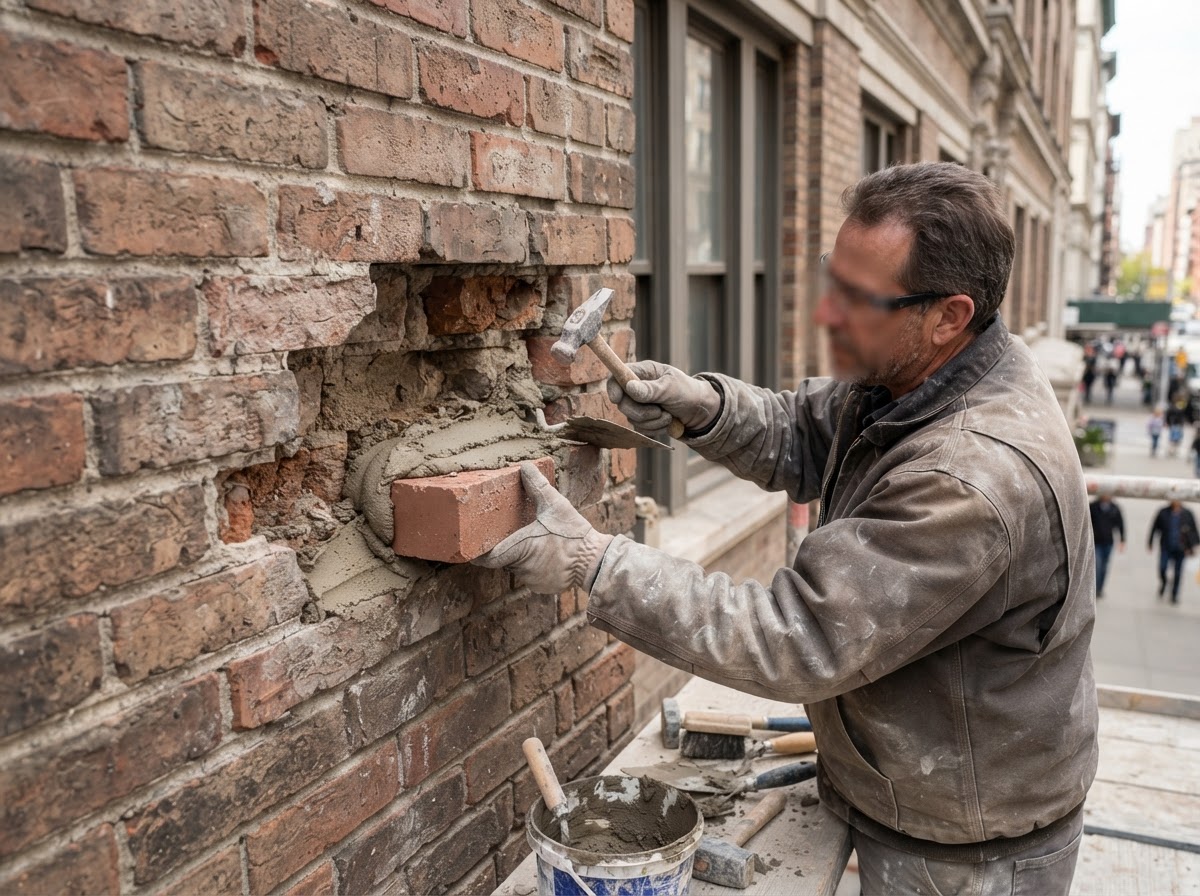
Cleaning and Surface Restoration
Cleaning and surface restoration removes staining, soiling, and efflorescence from Ames brick and stone masonry as part of a restoration scope. It suits walls where surface deterioration is present alongside unit and joint damage and cleaning is appropriate to the substrate.
A cleaning method compatible with the masonry substrate and stain type is selected, tested where appropriate, and applied in controlled sections, so the surface is restored without damaging the units or joints that are also being repaired.
Owners get a wall with both the structure and the surface restored, with staining and soiling removed and the masonry left clean and sound.
Water-Entry and Joint Detail Corrections
Water-entry and joint detail corrections address the flashing, sealant, and joint conditions that let moisture into Ames masonry and drove the deterioration. It suits restoration where the damage is connected to moisture entry that must be corrected alongside the repair.
Failed sealant at transitions is replaced, mortar joints that admit water are repointed, and the flashing or drainage details that let moisture reach the masonry are inspected and corrected where within scope, so the water source is addressed.
Owners get a restoration that corrects the moisture cause, not just the visible damage, so the repaired masonry is protected from the water entry that caused the deterioration in the first place.
What Causes Masonry to Need Restoration?
Long-Term Weather Exposure
Years of exposure to rain, wind, and temperature cycling erode mortar, stain surfaces, and deteriorate brick and stone. Long-term weather exposure is the baseline cause of the deterioration that restoration addresses, especially on older facades that have not had recent maintenance.
Deferred Mortar Maintenance
When mortar joint repointing is deferred, the joints continue to fail and the deterioration spreads from the joints to the units. Deferred maintenance is a common reason a wall needs broader restoration rather than localized repair — the damage has accumulated beyond a single spot.
Water Entry and Freeze-Thaw Damage
Water entering through failed joints, cracks, or detail failures saturates the masonry, and Central Iowa freeze-thaw cycles break it apart. Water entry and freeze-thaw damage are primary drivers of the spalling, cracking, and deterioration that restoration corrects.
Previous Incompatible Repairs
Prior repairs with hard mortar, wrong color, or incorrect methods create mixed conditions that later restoration must resolve. Incompatible repairs often concentrate stress and cause new damage, which is why a restoration may include correcting previous work alongside the original deterioration.
What Are the Signs a Masonry Area Needs Broader Restoration?
Multiple Types of Deterioration in One Area
When an area shows failed mortar, spalled brick, staining, and sealant failure together, the conditions are connected and a broader restoration is needed rather than isolated repairs. Multiple deterioration types in one area indicate the whole condition needs to be addressed.
Widespread Mortar Loss
Mortar loss across a wall or elevation, rather than in one spot, indicates the joints have failed broadly and wall-wide repointing is needed. Widespread mortar loss is a sign that localized repair no longer addresses the condition and restoration scope is appropriate.
Recurring Staining or Moisture Symptoms
Staining, efflorescence, or dampness that returns after cleaning or repair indicates an ongoing moisture source that has not been addressed. Recurring moisture symptoms mean the water-entry cause needs to be found and corrected as part of a restoration.
Repeated Local Repairs No Longer Address the Whole Condition
When local repairs have been done repeatedly and the damage keeps spreading or returning, the underlying condition has outgrown isolated repair. Repeated local repairs are a sign that a broader restoration scope is needed to address the whole condition at once.
How Does Masonry Restoration Work?
Step 1: Document Existing Conditions
The masonry is inspected and the existing conditions are documented — which units are sound, which have failed, the mortar condition, staining, and the moisture or detail problems present. This documentation forms the basis of the restoration scope and ensures nothing is missed.
Step 2: Separate Sound Masonry From Failed Material
The inspection separates the masonry that can remain from the material that needs repair or replacement, so the restoration preserves sound units and addresses only what has failed. This preservation-first approach keeps the scope focused and cost-effective.
Step 3: Define Repair, Repointing, Cleaning, and Detail Scope
The full scope is defined — which units need replacement, which joints need repointing, whether cleaning is appropriate, and which moisture or detail corrections are needed. The scope is phased so the work proceeds in a compatible sequence, with the locked benchmark applied to repointing portions.
Step 4: Complete Work in a Compatible Sequence
The restoration is completed in the defined sequence — unit replacement, repointing, cleaning, and detail corrections — using compatible materials throughout. The sequence is planned so each phase integrates with the others and the restoration addresses the whole condition coherently.
Step 5: Finish, Clean, and Review Remaining Conditions
The restored masonry is finished, cleaned, and reviewed for appearance and integrity, and any remaining conditions that were outside the current scope are documented for the owner. The work is left clean, and the owner understands what was addressed and what to monitor going forward.
How Much Does Masonry Restoration Cost in Ames?
Masonry restoration is typically priced by combined scope rather than one universal rate, because each project combines different amounts of unit replacement, repointing, cleaning, and detail work. The locked tuckpointing benchmark applies to the repointing portion. An estimate gives a number tied to your specific project.
Restoration Pricing Basis
Repointing portion: ~$7.86–$11.24 per sq. ft.
The locked Iowa planning benchmark applies to the repointing portion of the restoration. Joint depth, mortar matching, wall height, and access move this portion of the cost.
Combined restoration scope: priced by project
The total depends on brick and stone replacement, cleaning method, wall area, height and access, mortar matching, lintel, flashing, and sealant conditions, and deterioration severity. Staging and any permit or engineering requirements where the scope triggers them also affect the total.
Cost Drivers
Unit replacement and cleaning
The number of brick or stone units needing replacement, the cleaning method required, and the wall area all move the total. Natural stone replacement typically costs more than brick, and severe deterioration increases both replacement and repointing scope.
Detail conditions and staging
Lintel, flashing, and sealant conditions that need correction, the staging required for access, and any permit or engineering requirements where the scope triggers them all affect the total. An on-site estimate is needed for exact pricing tied to your project.
Restoration itself typically does not require a permit, but if the work involves structural repair, permit requirements may apply. Verify project-specific requirements with the City of Ames where relevant.
Get Your Estimate
Tell us about your project. We respond to estimate requests for Ames, Nevada, Huxley, Story City, Iowa.
Frequently Asked Questions About Masonry Restoration
What is masonry restoration?
Masonry restoration is the broader renewal of deteriorated masonry, combining brick and stone replacement, mortar repointing, cleaning, and moisture or detail corrections as the scope requires. It aims to preserve sound existing masonry while repairing what has failed and correcting the conditions that caused the deterioration.
How is masonry restoration different from brick repair?
Masonry restoration is broader than brick repair, which typically addresses isolated unit damage. Restoration combines multiple repair types — unit replacement, repointing, cleaning, and detail corrections — to address a whole deteriorated area, while brick repair focuses on specific damaged units.
Can older masonry be restored without replacing everything?
Yes, older masonry can usually be restored without replacing everything, because restoration preserves sound units and repairs only what has failed. The inspection separates sound masonry from failed material, so the scope is focused on the deteriorated areas rather than full replacement.
What does mortar matching involve?
Mortar matching evaluates the existing mortar for composition, color, and hardness, and formulates a compatible replacement that performs correctly with the surrounding masonry. Matching is close, with the understanding that existing mortar has aged, so the new mortar blends visually within the limits of aging.
Can cleaning be part of masonry restoration?
Yes, cleaning can be part of masonry restoration when staining, soiling, or efflorescence is present alongside unit and joint damage. A cleaning method compatible with the masonry substrate and stain type is selected and applied in controlled sections, so the surface is restored without damaging the units being repaired.
How much does masonry restoration cost in Ames?
Masonry restoration cost depends on the combined scope — unit replacement, repointing, cleaning, and detail corrections. The repointing portion runs about $7.86–$11.24 per square foot, with the total driven by brick and stone replacement, cleaning, wall area, access, and deterioration severity. An on-site estimate is needed for exact pricing.
Does masonry restoration fix moisture problems?
Masonry restoration can fix moisture problems when the scope includes correcting the water-entry paths — failed joints, sealant, or flashing — that caused the deterioration. Addressing the moisture source is part of a complete restoration, or the damage will recur after the visible repair.
When should a masonry wall be evaluated for broader repair?
A masonry wall should be evaluated for broader restoration when it shows multiple types of deterioration in one area, widespread mortar loss, recurring moisture symptoms, or when repeated local repairs no longer address the whole condition. These signs indicate the damage has outgrown isolated repair.
Request Masonry Restoration in Ames
Call Ames Masonry Pro at 515-715-4950 for masonry restoration in Ames, Nevada, Huxley, and Story City. 10+ years of masonry experience and insured service, with preservation-first scope and compatible materials.
Masonry Repair • Brick Repair • Tuckpointing • Masonry Cleaning • Masonry Waterproofing • Stone Repair • FAQs
Request an Estimate
Tell us about your project. We respond to estimate requests for Ames, Nevada, Huxley, Story City, Iowa.