Masonry Caulking & Sealant Replacement in Ames, IA
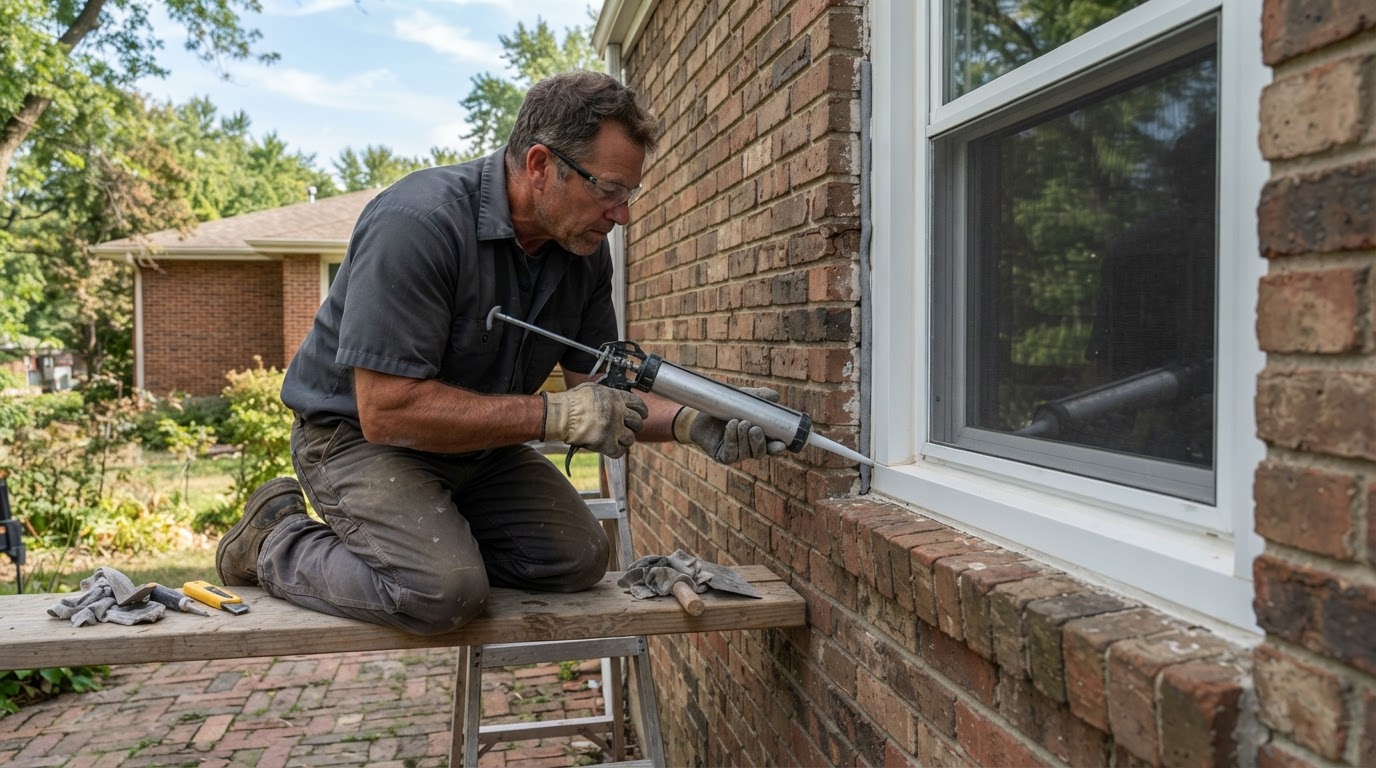
Ames Masonry Pro replaces failed masonry caulking and sealant at building transitions, perimeter joints, expansion and control joints, openings, and material interfaces across Ames, Nevada, Huxley, and Story City. Sealant joints are different from rigid mortar joints — they are flexible, designed to accommodate movement between materials, and when they fail from age, movement, or poor adhesion, water enters through the gaps and causes the moisture damage that drives masonry deterioration.
With 10+ years of hands-on masonry experience and insured service, every sealant project identifies the joint function and failure, removes the failed material, prepares the joint surfaces, installs backing and primer where appropriate, and applies a compatible elastomeric sealant tooled to a clean finish. Ames weather and movement cycles make flexible joint performance important, and caulk is never presented as a solution for structural movement or failed flashing — those are different problems that need different repairs. No chemical safety or DIY application instructions are provided.
Request an Estimate
Tell us about your project. We respond to estimate requests for Ames, Nevada, Huxley, Story City, Iowa.
Why Choose Ames Masonry Pro for Masonry Caulking & Sealant in Ames?
10+ Years of Masonry Experience
More than a decade of masonry work means joint function is read correctly — which joints are sealant joints versus mortar joints, and why the sealant failed. That experience ensures the replacement addresses the actual joint and failure rather than just applying caulk over a problem.
Insured Service
Ames Masonry Pro is insured, giving property owners protection while masonry sealant work is underway on their home or commercial building. Insurance is part of doing the job responsibly across sealant scopes.
Sealant Distinguished From Mortar Repair
Sealant joints and mortar joints are different — sealant is flexible and accommodates movement, while mortar is rigid and bonds units. Knowing the difference ensures the right material is used in the right joint, and that mortar failure is not misdiagnosed as a sealant problem or vice versa.
Joint-Prep Focus
Failed sealant is fully removed and the joint surfaces are prepared before new sealant is installed, because adhesion depends on clean, sound surfaces. Proper joint preparation is what makes the new sealant bond and last — installing new sealant over old material does not hold.
Compatible Material Selection
A compatible elastomeric sealant is selected for the substrate and joint function, with backer rod and primer where the system requires. Compatible materials ensure the sealant performs correctly with the masonry and the adjacent materials, and accommodates the expected movement.
Water-Entry Diagnosis and Clean Tooling
The sealant failure is evaluated as part of the water-entry picture, so the replacement addresses the moisture path rather than just the visible gap. The finished sealant is tooled to a clean, weathertight finish that sheds water and looks professional.
Our Masonry Caulking & Sealant Services
Failed Sealant Removal and Replacement
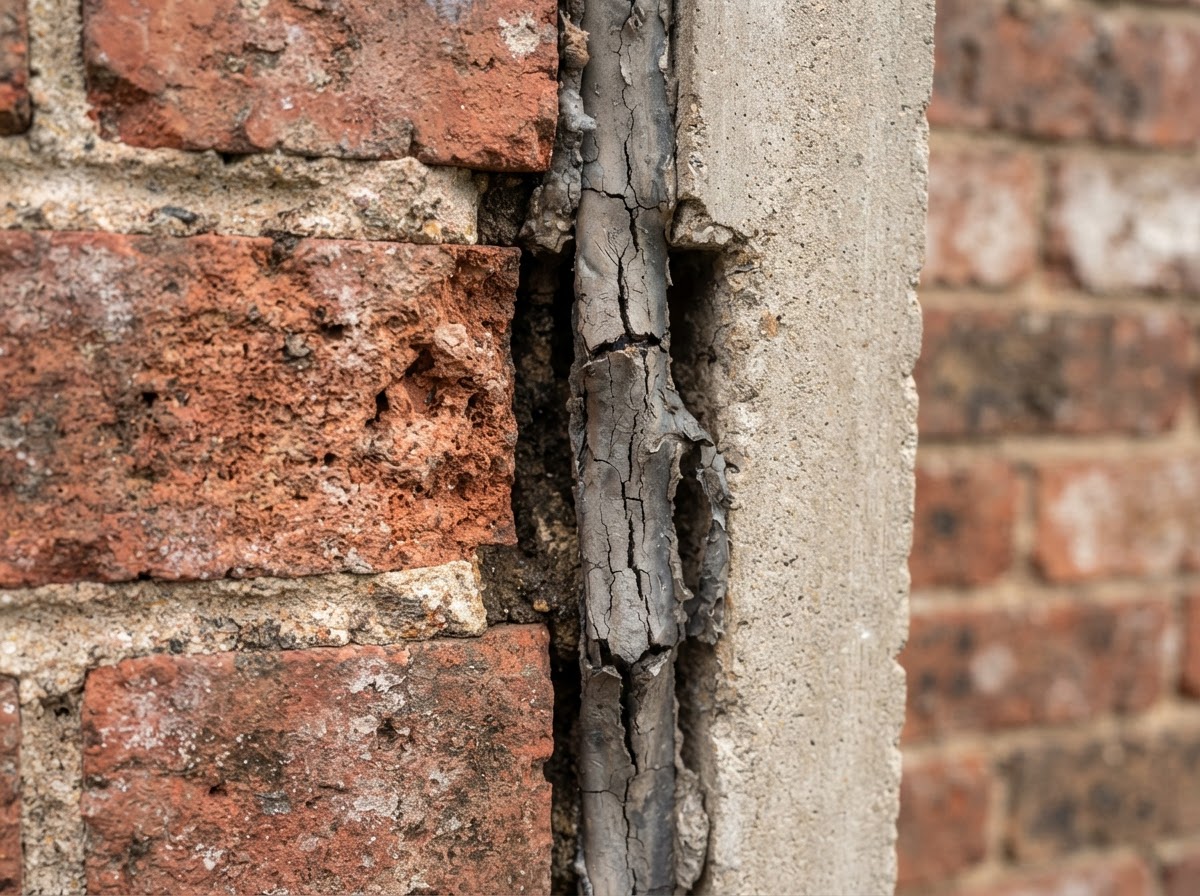
Failed sealant removal and replacement renews the cracked, split, debonded, or missing sealant on Ames masonry buildings. It suits walls where existing sealant has failed and is admitting water through the gaps it was meant to seal.
The failed sealant is fully removed, the joint surfaces are cleaned and prepared, backer rod is installed where appropriate, and a compatible elastomeric sealant is applied and tooled to a clean finish that bonds to the substrate and accommodates movement.
Owners get weathertight joints with the failed sealant replaced by a compatible, flexible sealant that sheds water and moves with the building, stopping the water entry that the failed sealant allowed.
Masonry Perimeter Joint Sealing
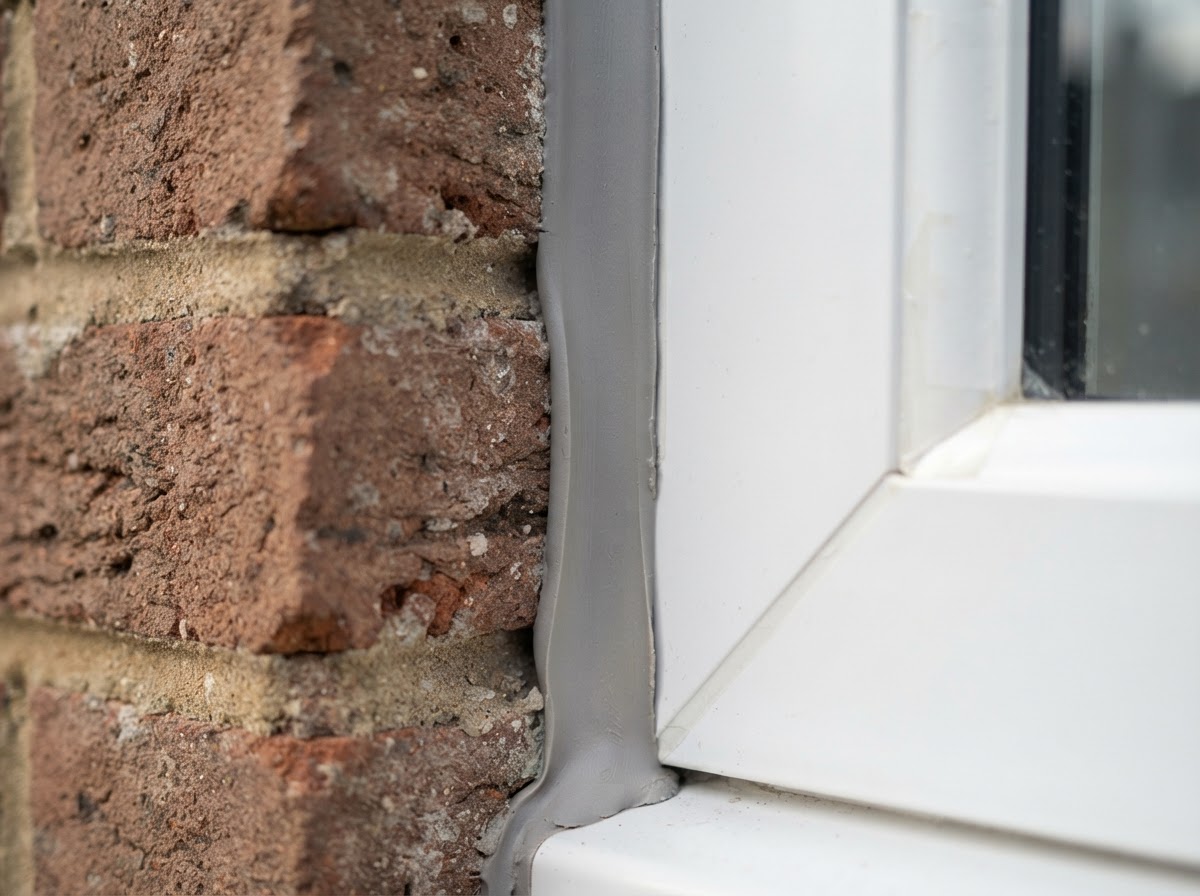
Masonry perimeter joint sealing seals the joints around openings and at the perimeter of masonry elements on Ames properties. It suits walls where the sealant around windows, doors, or masonry edges has failed and is letting water in at the transitions.
The perimeter joints are evaluated, failed sealant is removed, the surfaces are prepared, and compatible sealant is installed with proper joint geometry and backer rod, so the perimeter sheds water and accommodates the movement between the masonry and the adjacent materials.
Owners get weathertight perimeters that stop water entry at the edges of masonry elements, addressing a common leak path that is invisible until the sealant fails.
Expansion and Control Joint Sealant
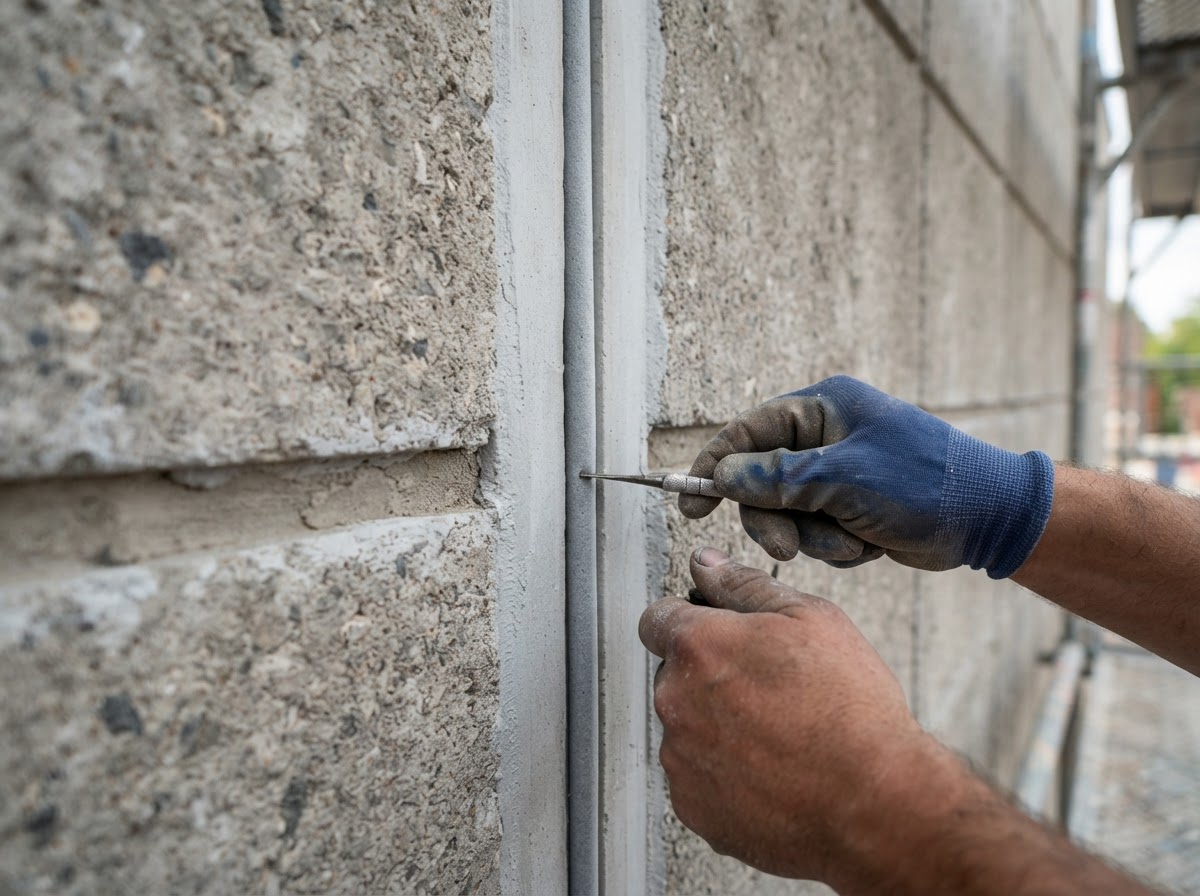
Expansion and control joint sealant renews the flexible sealant in the movement joints on Ames masonry walls. It suits walls where expansion or control joint sealant has failed and the joints are no longer accommodating movement or shedding water.
The joint is evaluated for its movement function, failed sealant is removed, backer rod is installed to provide the proper joint geometry, and compatible sealant is applied so the joint can compress and expand with the wall while remaining weathertight.
Owners get movement joints that function as designed — accommodating thermal and structural movement without cracking the masonry, and shedding water rather than admitting it through the joint.
Masonry-to-Window, Door, Metal, or Other Material Transitions
Masonry-to-transition sealing addresses the joints where masonry meets windows, doors, metal, or other materials on Ames buildings. It suits transitions where the different materials move differently and the sealant between them has failed.
The transition joint is evaluated for the movement between the materials, failed sealant is removed, the surfaces are prepared, and a compatible sealant is installed with backer rod and primer where the system requires, so the transition accommodates differential movement without debonding.
Owners get weathertight transitions that handle the movement between dissimilar materials, stopping the water entry that occurs when sealant at transitions fails and the materials move apart.
What Causes Masonry Sealant Joints to Fail?
Age and Weathering
Sealant ages and loses flexibility over years of UV exposure, temperature cycling, and weathering, eventually cracking, splitting, or losing adhesion. Age-related failure is the most common cause of sealant deterioration, and exterior sealant has a finite service life that depends on product and exposure.
Joint Movement
Movement from thermal expansion, settlement, or structural stress exceeds the sealant's capacity and causes it to split or debond. Joints that experience more movement than the sealant can accommodate fail, which is why joint geometry and sealant selection must match the expected movement.
Poor Adhesion or Surface Preparation
Sealant installed over dirty, wet, or unsound surfaces does not bond properly and debonds prematurely. Poor surface preparation is a common cause of early failure, which is why failed sealant is fully removed and surfaces are prepared before new sealant is installed.
Incorrect Material or Joint Configuration
The wrong sealant for the substrate or joint function, or a joint without proper backer rod geometry, fails because it cannot accommodate the movement or bond to the material. Correct material selection and joint configuration are what make sealant perform, and incorrect choices cause premature failure.
What Are the Signs Sealant Needs Replacement?
Cracked or Split Sealant
Sealant that is cracked, split, or has visible gaps has lost its flexibility and is no longer sealing the joint. Cracked or split sealant is admitting water and should be replaced, as it will continue to deteriorate and let more water in.
Sealant Pulling Away From Joint Edges
Sealant that is debonding — pulling away from one or both sides of the joint — has lost adhesion and is no longer sealed. Debonding is a sign of poor adhesion or surface preparation, and the sealant should be removed and replaced with proper preparation.
Missing Sections or Open Gaps
Sealant that is missing entirely or has open gaps is no longer protecting the joint at all. Missing sealant means the joint is fully exposed to water entry and should be replaced promptly to stop the moisture damage.
Recurring Moisture at a Transition
Moisture or water stains that recur at a transition — around a window, door, or material interface — indicate the sealant at that transition has failed. Recurring moisture at a transition is a sign that the sealant needs evaluation and replacement, not just cleaning.
How Does Masonry Sealant Replacement Work?
Step 1: Identify the Joint Function and Failure
The joint is evaluated to determine its function — perimeter, expansion, control, or transition — and how the sealant failed. This evaluation ensures the replacement uses the right material and joint geometry for the specific joint, rather than a one-size approach.
Step 2: Remove Failed Sealant
The failed sealant is fully removed from the joint, because new sealant installed over old material does not bond properly. Complete removal is the foundation of a lasting replacement — it exposes the joint surfaces so they can be prepared for adhesion.
Step 3: Prepare Joint Surfaces
The joint surfaces are cleaned and prepared so the new sealant bonds properly, because adhesion depends on clean, dry, sound surfaces. Proper preparation is what prevents the premature debonding that caused the previous sealant to fail.
Step 4: Install Backing/Primer Where Appropriate
Backer rod is installed to provide the proper joint geometry — a two-point adhesion with the right depth — and primer is applied where the sealant system requires it. Proper backing and primer ensure the sealant performs as designed rather than bonding in a way that causes failure.
Step 5: Apply and Tool Compatible Sealant
A compatible elastomeric sealant is applied and tooled to a clean, concave finish that sheds water and bonds to both sides of the joint. Tooling ensures the sealant has the proper shape and contact, and the finished joint is weathertight and professional.
How Much Does Masonry Caulking & Sealant Replacement Cost in Ames?
Masonry sealant replacement is priced by linear footage, joint size, access, and the removal and preparation required. No narrow universal rate is invented, because the cost varies with the joint and substrate. If mortar failure exists instead of sealant failure, the work is directed toward tuckpointing. An estimate gives a number tied to your specific project.
Sealant Replacement Pricing Basis
Masonry sealant replacement: priced by linear footage and joint size
Cost depends on linear footage, joint size and depth, access and height, removal and preparation difficulty, backing and primer needs, and substrate condition. An on-site estimate is needed for exact pricing.
Multiple joints and access
Projects with multiple joints or transitions spread setup across more work. Elevated or hard-to-reach joints require scaffolding or lifts, which adds to labor and setup cost.
Cost Drivers
Joint preparation and substrate condition
The difficulty of removing the failed sealant, the substrate condition, and the backing and primer needs all move the price. Joints with significant old material or damaged substrates require more preparation, which increases cost.
Adjacent repair needs
If mortar failure exists instead of sealant failure, the work is directed toward tuckpointing rather than selling sealant as a substitute. Adjacent masonry repair needs are identified during the evaluation and may add to the scope.
Masonry sealant replacement itself does not require a permit. If the work is part of a larger repair scope, permit requirements depend on that scope. Verify project-specific requirements with the City of Ames where relevant.
Get Your Estimate
Tell us about your project. We respond to estimate requests for Ames, Nevada, Huxley, Story City, Iowa.
Frequently Asked Questions About Masonry Caulking & Sealant
What is the difference between masonry caulk and mortar?
Masonry caulk, or sealant, is a flexible material used in joints that need to accommodate movement between materials, while mortar is a rigid material that bonds masonry units together. Caulk goes in expansion, control, and transition joints; mortar goes between brick and stone units. They serve different purposes and are not interchangeable.
How do I know a sealant joint has failed?
A sealant joint has failed when it is cracked, split, debonding from the joint edges, missing, or when moisture recurs at the transition. These signs mean the sealant is no longer sealing the joint and water is entering, and the sealant should be removed and replaced with proper preparation.
Can new sealant be installed over old caulk?
No, new sealant should not be installed over old caulk, because it will not bond properly to the failed material and will debond prematurely. The old sealant must be fully removed and the joint surfaces prepared before new sealant is installed, so the replacement adheres and lasts.
Why is backer rod used in some masonry joints?
Backer rod is used to provide the proper joint geometry — a two-point adhesion where the sealant bonds to the sides of the joint but not the back, with the right depth for the joint size. This geometry allows the sealant to flex correctly, and without it, the sealant bonds in a way that causes premature failure.
Can sealant stop every masonry leak?
No, sealant cannot stop every masonry leak, because leaks often come from failed flashing, drainage problems, or structural defects that sealant cannot address. Sealant stops water entry at the joints and transitions it is designed for, but the water source must be correctly identified, or the sealant will not stop the leak.
How much does masonry sealant replacement cost in Ames?
Masonry sealant replacement cost depends on linear footage, joint size and depth, access and height, removal and preparation difficulty, backing and primer needs, and substrate condition. An on-site estimate is needed for exact pricing, because the cost varies with the joint and the substrate.
How long does exterior masonry sealant last?
The service life of exterior masonry sealant depends on the product, exposure, joint movement, surface preparation, and installation quality. No fixed lifespan is guaranteed, because these factors vary, but properly installed compatible sealant with good preparation lasts many years before needing replacement.
Request Masonry Caulking & Sealant Replacement in Ames
Call Ames Masonry Pro at 515-715-4950 for masonry caulking and sealant replacement in Ames, Nevada, Huxley, and Story City. 10+ years of masonry experience and insured service, with proper joint preparation and compatible sealant.
Masonry Repair • Masonry Waterproofing • Tuckpointing • Masonry Restoration • Masonry Wall Repair • FAQs
Request an Estimate
Tell us about your project. We respond to estimate requests for Ames, Nevada, Huxley, Story City, Iowa.