Masonry Cleaning in Ames, IA | 10+ Years Experience
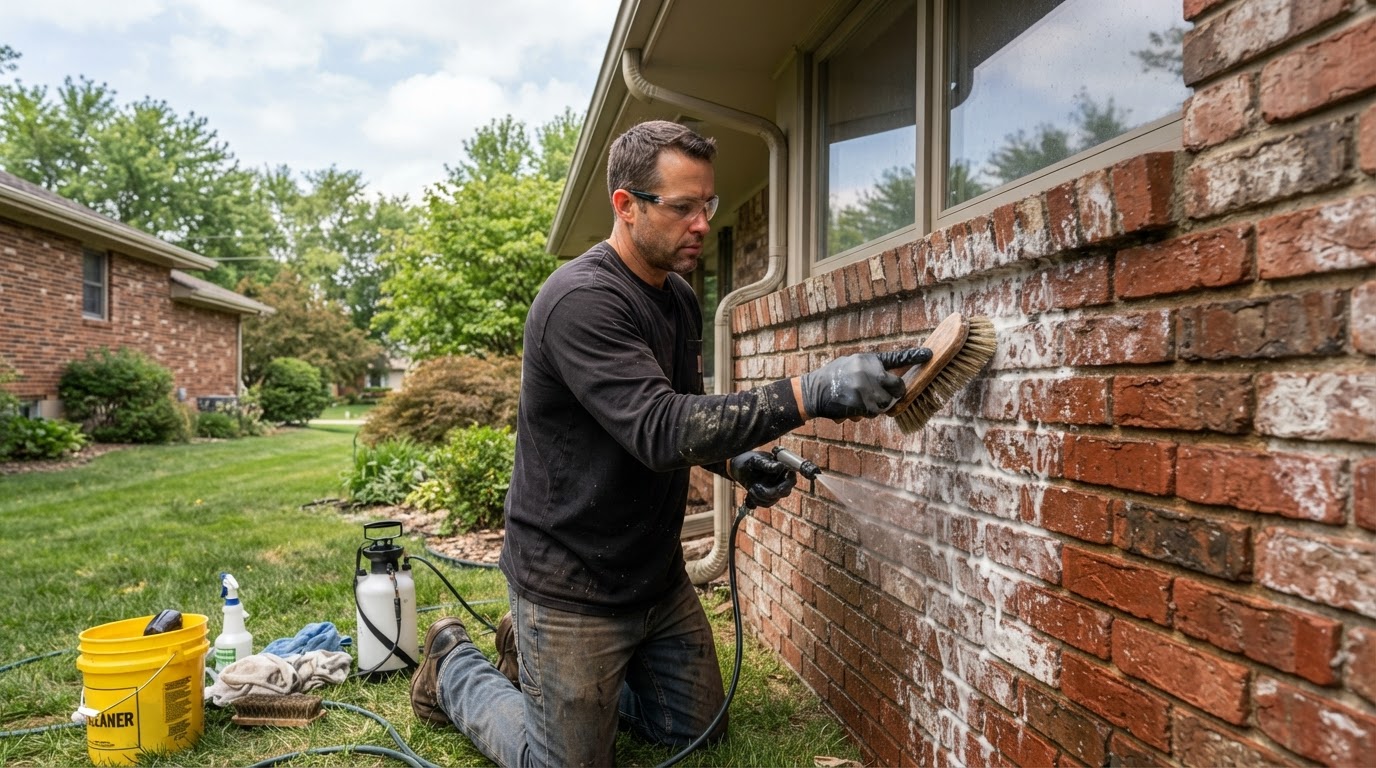
Ames Masonry Pro provides professional masonry cleaning for brick, stone, and masonry surfaces across Ames, Nevada, Huxley, and Story City. Cleaning removes efflorescence, atmospheric soiling, biological growth, and construction or repair residue — but the method must match the masonry substrate and the staining type, because aggressive or incorrect cleaning can damage brick faces, erode mortar joints, and cause surface deterioration worse than the stain it removes.
With 10+ years of hands-on masonry experience and insured service, every cleaning project identifies the masonry and stain type, selects a compatible cleaning method, tests a small area where appropriate, and cleans in controlled sections with controlled rinsing. Not every stain can be removed, and severe deterioration should be repaired rather than hidden by cleaning. No chemical concentration recipes or aggressive pressure-washing instructions are provided, and cleaning may be part of a restoration scope but this page owns cleaning hiring intent.
Request an Estimate
Tell us about your project. We respond to estimate requests for Ames, Nevada, Huxley, Story City, Iowa.
Why Choose Ames Masonry Pro for Masonry Cleaning in Ames?
10+ Years of Masonry Experience
More than a decade of masonry work means the substrate and stain type are read correctly — which cleaner is safe for the brick or stone, and which method removes the stain without damaging the surface. That experience prevents the surface damage that incorrect cleaning causes.
Insured Service
Ames Masonry Pro is insured, giving property owners protection while masonry cleaning work is underway on their home or commercial building. Insurance is part of doing the job responsibly across cleaning scopes.
Substrate-First Cleaning Method
The cleaning method is selected based on the masonry substrate — brick, natural stone, or manufactured veneer — and the stain type, because what is safe for one material can damage another. Substrate-first selection is what prevents the etching, spalling, and joint damage that generic cleaning causes.
Test-Area Mindset
Where appropriate, a small test area is cleaned first to confirm the method is effective and safe before the full wall is treated. The test-area approach ensures the method works on the specific masonry and stain before it is applied broadly, preventing widespread damage.
Restoration Awareness
Cleaning is understood as part of restoration, not a substitute for repair. If the masonry has severe deterioration, that damage is repaired rather than hidden by cleaning, and cleaning is coordinated with repointing or unit replacement where the scope requires.
Transparent Expectations and Cleanup
Property owners get honest expectations about what cleaning can and cannot remove, and the work is left clean with runoff controlled. No promise is made that every stain can be removed, because some staining is permanent or indicates underlying moisture problems that need repair.
Our Masonry Cleaning Services
Brick Cleaning
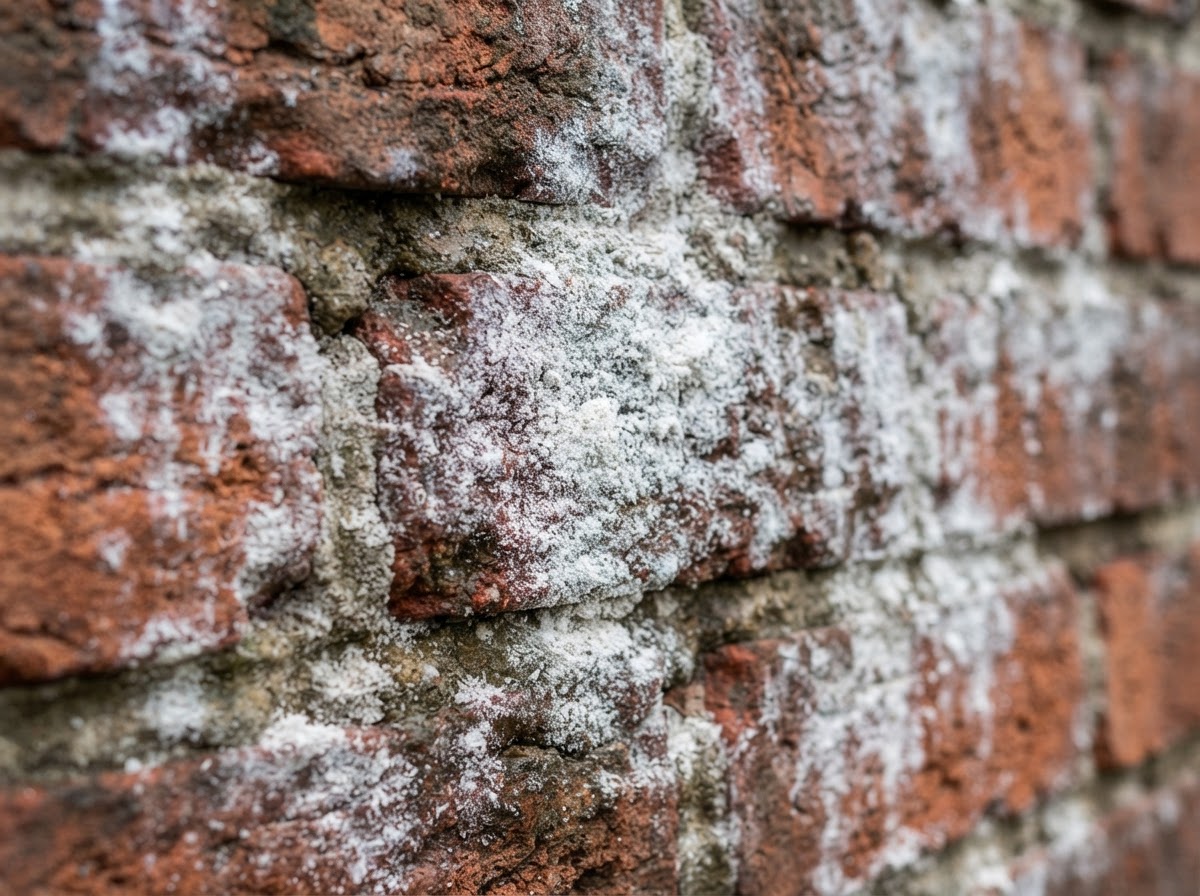
Brick cleaning removes soiling, staining, and efflorescence from clay brick walls on Ames residential and commercial properties. It suits brick masonry where surface contamination is present and the substrate can tolerate a compatible cleaning method.
The brick type and stain are identified, a compatible cleaner and method are selected, a test area confirms the approach, and the brick is cleaned in controlled sections with controlled rinsing, so the surface is restored without etching the brick faces or eroding the mortar joints.
Owners get cleaner brick with staining and soiling removed, and the surface restored without the damage that aggressive or incorrect cleaning causes.
Stone Masonry Cleaning
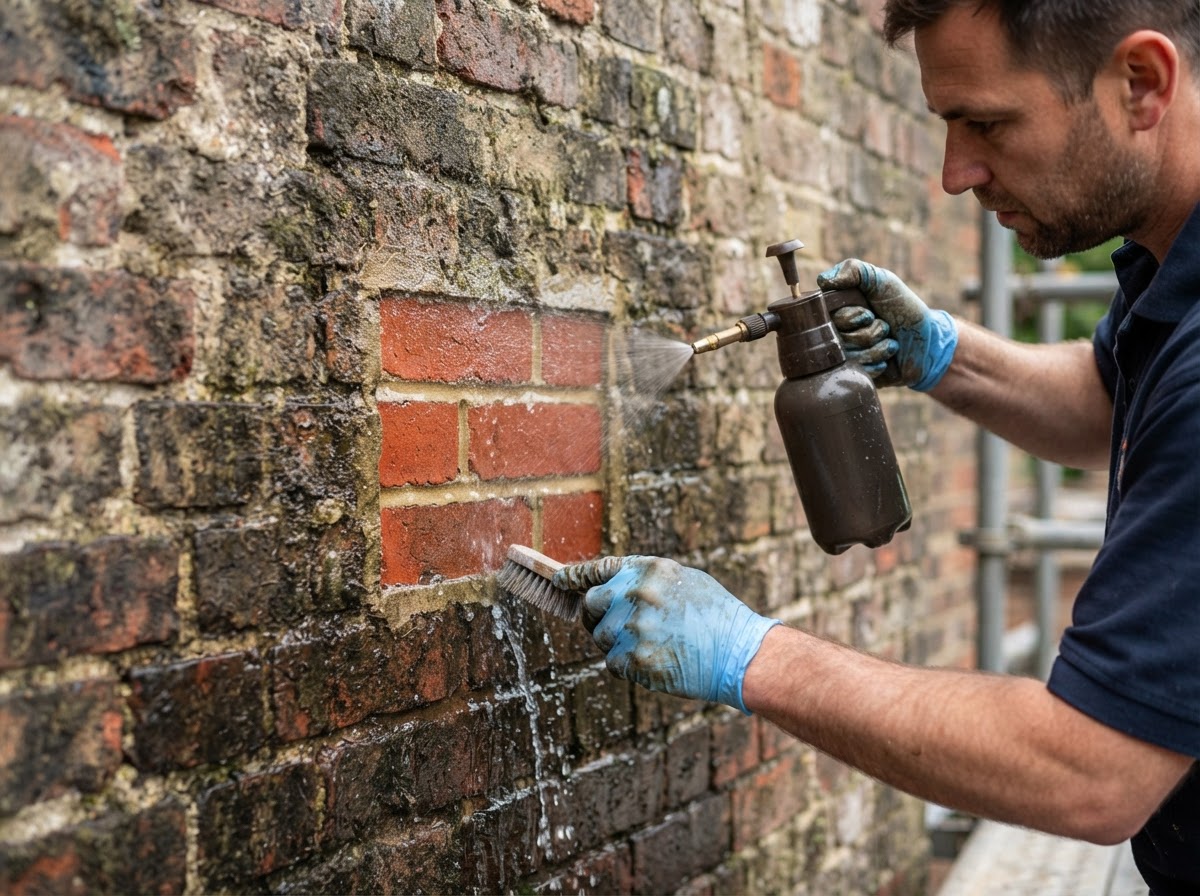
Stone masonry cleaning removes staining and soiling from natural stone walls, accents, and foundations on Ames properties. It suits limestone, fieldstone, and other natural stone where surface contamination is present and the substrate requires a gentle, compatible approach.
The stone type and stain are identified, and a cleaning method compatible with the specific stone — which may be more sensitive than brick — is selected and tested before application, because acid-sensitive stone can be permanently damaged by the wrong cleaner.
Owners get cleaner stone with staining removed, and the surface restored with a method chosen for the specific substrate rather than a generic approach that could etch or damage the stone.
Efflorescence and Mineral Deposit Cleaning
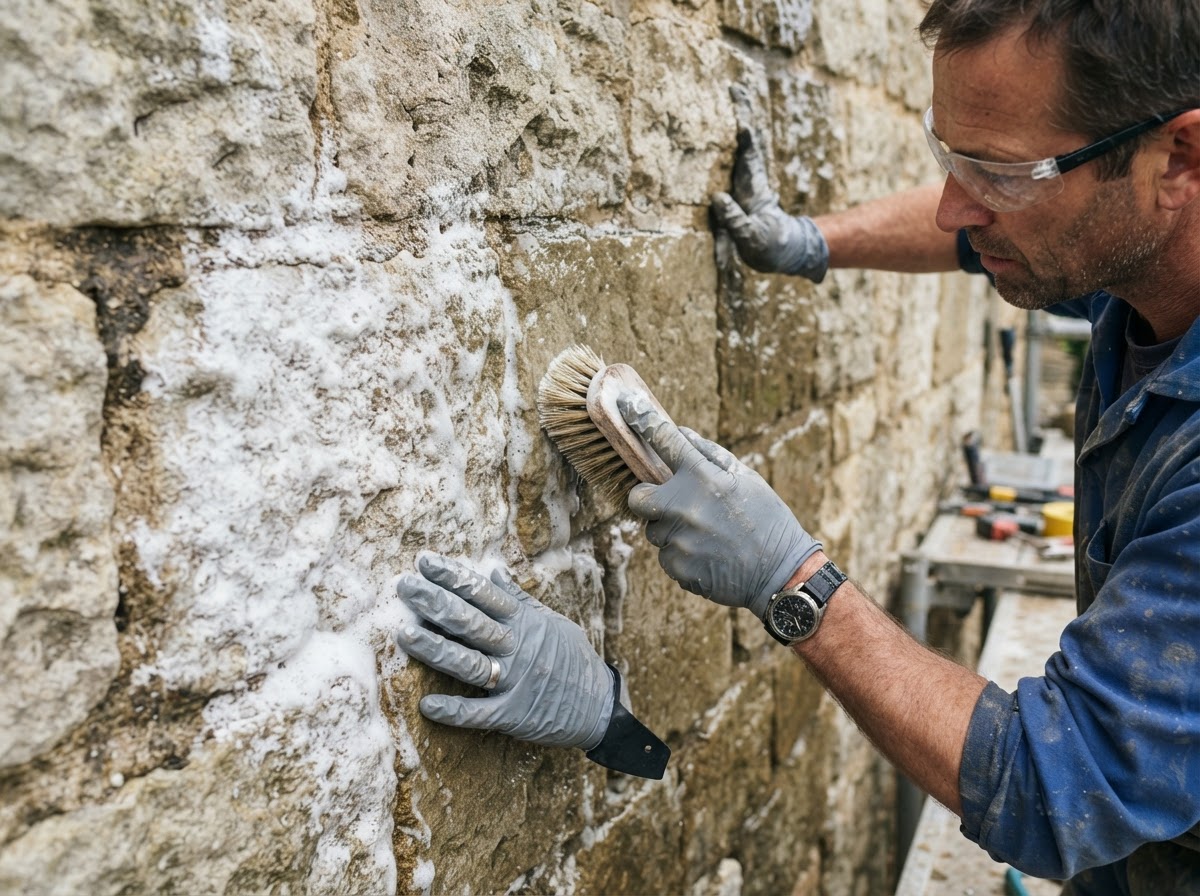
Efflorescence and mineral deposit cleaning removes the white, powdery mineral deposits that appear on Ames masonry when moisture moves through the wall. It suits walls where efflorescence is present as a surface symptom of moisture movement.
The efflorescence is removed with a compatible method, and the moisture source that caused it is evaluated, because efflorescence is a symptom — if the moisture source is not addressed, the deposits will return after cleaning.
Owners get a cleaner wall with the deposits removed, and an understanding of the moisture source that caused them, so the efflorescence does not simply reappear.
Cleaning as Part of Masonry Restoration
Cleaning as part of masonry restoration removes staining and soiling from Ames walls that are also being repaired or repointed. It suits restoration scopes where the surface needs cleaning alongside unit and joint repair to fully restore the masonry.
Cleaning is coordinated with the repair scope, using a method compatible with the substrate and the new mortar, so the surface is restored without disturbing the repointed joints or the replaced units.
Owners get a wall with both the structure and the surface restored, with staining removed and the masonry left clean and sound as part of a complete restoration.
What Causes Masonry Staining?
Efflorescence From Moisture Movement
Efflorescence forms when water moves through the masonry, dissolves mineral salts from the mortar or brick, and deposits them on the surface as it evaporates. It is a symptom of moisture movement, not just a surface stain, and the moisture source must be addressed or the efflorescence returns.
Dirt and Atmospheric Soiling
Dirt, dust, and atmospheric pollutants accumulate on masonry surfaces over years of exposure, especially on walls sheltered from rain that does not naturally wash them. Atmospheric soiling is a surface contaminant that compatible cleaning can remove, restoring the original appearance.
Organic/Biological Surface Growth Where Conditions Allow
Algae, moss, and other biological growth can appear on masonry in damp, shaded conditions where moisture persists. Biological growth is a surface contaminant that compatible cleaning removes, but the damp conditions that allowed it should be addressed or it will return.
Construction or Repair Residue
Mortar smears, construction dust, and residue from prior repairs can stain masonry surfaces, especially after repointing or unit replacement. Construction residue is a surface contaminant that compatible cleaning removes as part of finishing the repair or restoration work.
When Should Masonry Be Professionally Cleaned?
Staining Is Widespread or Persistent
When staining, soiling, or efflorescence covers a large area or persists despite weathering, professional cleaning can restore the surface. Widespread or persistent staining is a sign that the surface needs compatible cleaning rather than continuing to accumulate contamination.
Material Type Makes Cleaner Selection Important
When the masonry is natural stone, older brick, or a sensitive substrate, the cleaner and method must be selected carefully to avoid damage. Sensitive materials are a sign that professional cleaning with substrate-first method selection is needed rather than generic or DIY approaches.
Cleaning Is Part of a Repair/Restoration Scope
When masonry is being repaired or restored, cleaning is often part of the scope to remove staining and residue alongside the repair. Cleaning as part of restoration ensures the surface matches the repaired structure and the work is left clean.
Aggressive DIY Cleaning Could Damage the Surface
When the temptation is to pressure-wash or use harsh chemicals, professional cleaning prevents the etching, spalling, and joint damage that aggressive DIY methods cause. The risk of damage is a sign that a professional, substrate-compatible approach is needed.
How Does Professional Masonry Cleaning Work?
Step 1: Identify Masonry and Stain Type
The masonry substrate — brick, natural stone, or manufactured veneer — and the stain type are identified, because the cleaning method depends on both. This identification is the foundation of the scope, because what removes one stain may damage a specific substrate.
Step 2: Select a Compatible Cleaning Method
A cleaning method compatible with the substrate and stain type is selected, which may involve a specific cleaner, dwell time, and controlled rinsing rather than pressure. The method is chosen to remove the stain without etching the surface or eroding the mortar joints.
Step 3: Test a Small Area Where Appropriate
Where appropriate, a small test area is cleaned to confirm the method is effective and safe on the specific masonry before full application. The test confirms the approach works and causes no damage, preventing a method from being applied broadly that could harm the wall.
Step 4: Clean in Controlled Sections
The masonry is cleaned in controlled sections with the compatible method, managing dwell time and runoff, so the cleaning is consistent and the surrounding areas are protected. Controlled section cleaning ensures the method is applied evenly and safely across the wall.
Step 5: Rinse, Inspect, and Adjust as Needed
The cleaned sections are rinsed with controlled water, inspected for effectiveness and any surface impact, and the method is adjusted if needed for stubborn areas. The finished wall is left clean, with the surface restored and no damage from the cleaning process.
How Much Does Masonry Cleaning Cost in Ames?
Masonry cleaning is priced by square footage and project scope, with the cost depending on the cleaning method, stain type, access, and whether repair or repointing is needed first. No unsupported narrow local range is invented. An estimate gives a number tied to your specific wall.
Cleaning Pricing Basis
Masonry cleaning: priced by square footage and method
Cost depends on square footage, the cleaning method required for the substrate and stain, access and height, stain type, test requirements, protection and setup, and whether multiple passes are needed. An on-site estimate is needed for exact pricing.
Repair or repointing needed first
If the masonry has severe deterioration, repair or repointing should be completed before or alongside cleaning, and that repair scope adds to the total. Cleaning is not a substitute for repairing damaged masonry — severe deterioration should be repaired rather than hidden.
Cost Drivers
Method, stain type, and access
The cleaning method required — which depends on the substrate and stain — the stain type and severity, access and height, and the number of passes all move the price. Natural stone may require a gentler, more time-consuming method than brick.
Test requirements and setup
Test areas, protection and setup, and runoff control all affect the cost. Larger or more complex walls require more setup, and an on-site estimate is needed for exact pricing tied to your wall.
Masonry cleaning itself does not require a permit. If cleaning is part of a repair or restoration scope, permit requirements depend on that scope. Verify project-specific requirements with the City of Ames where relevant.
Get Your Estimate
Tell us about your project. We respond to estimate requests for Ames, Nevada, Huxley, Story City, Iowa.
Frequently Asked Questions About Masonry Cleaning
How much does masonry cleaning cost in Ames?
Masonry cleaning cost depends on square footage, the cleaning method required for the substrate and stain, access, stain type, test requirements, and whether repair or repointing is needed first. An on-site estimate is needed for exact pricing, because the method varies with the masonry and the stain.
Can all brick stains be removed?
No, not all brick stains can be removed. Some staining is permanent, and some indicates underlying moisture problems that need repair rather than cleaning. Honest expectations are part of the process — compatible cleaning removes what can be removed, and permanent stains or moisture symptoms are identified rather than promised away.
What causes white deposits on brick?
White deposits on brick are efflorescence — mineral salts left behind as water moves through the wall and evaporates. Efflorescence is a symptom of moisture movement, not just a surface stain, and the moisture source must be addressed or the deposits return after cleaning.
Can pressure washing damage masonry?
Yes, pressure washing can damage masonry by etching brick faces, eroding mortar joints, and driving water into the wall. Aggressive pressure washing is not the default approach — compatible cleaning methods with controlled rinsing are used to remove staining without the damage that high pressure causes.
Is masonry cleaning safe for older brick?
Masonry cleaning can be safe for older brick when a compatible method is selected for the substrate, tested on a small area, and applied with controlled rinsing. Older brick may be more sensitive than newer brick, which is why the method is chosen carefully and tested rather than applied generically.
Should mortar repairs be completed before cleaning?
Yes, mortar repairs should generally be completed before or alongside cleaning, so the cleaning does not disturb fresh repointing and the surface matches the repaired structure. Cleaning after repointing removes residue from the repair and leaves the wall consistent and clean.
Can stone be cleaned the same way as brick?
No, stone is not always cleaned the same way as brick, because natural stone may be more sensitive to certain cleaners — particularly acid-sensitive stone that can be permanently etched. The cleaning method is selected for the specific substrate, so stone is cleaned with a method compatible with its sensitivity.
Request Masonry Cleaning in Ames
Call Ames Masonry Pro at 515-715-4950 for masonry cleaning in Ames, Nevada, Huxley, and Story City. 10+ years of masonry experience and insured service, with substrate-first method selection and controlled cleaning.
Masonry Repair • Masonry Restoration • Masonry Waterproofing • Tuckpointing • Masonry Caulking & Sealant • FAQs
Request an Estimate
Tell us about your project. We respond to estimate requests for Ames, Nevada, Huxley, Story City, Iowa.